

.png)
.png)
.png)
%201.png)
.png)
You've invested in an enterprise cyber risk management platform. Your security team completed training, your compliance officers signed off, and your board approved the budget. Six months later, adoption has stalled. Assessments still live in spreadsheets. Risk data remains fragmented across departments. Executive reports take days to compile manually.
This scenario plays out across industries, from financial services to healthcare to critical infrastructure. CyberSaint helps organizations overcome these exact barriers by unifying risk, compliance, and executive reporting into a single platform. This guide breaks down why enterprise cyber risk platforms fail to gain traction and what you can do to drive meaningful adoption.
How to Fix Enterprise Cyber Risk Platform Adoption
- Platform adoption fails when cyber risk management remains disconnected from day-to-day security operations and executive decision-making.
- Data silos between compliance, security operations, and risk teams create fragmented views that undermine platform value.
- Integration complexity delays time-to-value, causing teams to revert to familiar spreadsheet-based workflows.
- CyberSaint addresses adoption barriers through automated crosswalking, real-time control monitoring, and board-ready reporting.
- Successful adoption requires aligning platform capabilities with specific business outcomes, not just technical requirements.
What Causes Enterprise Cyber Risk Platform Adoption to Fail?
The challenge isn't a lack of tools. Most enterprises have no shortage of security software. The problem lies in connecting those tools to meaningful business outcomes.
According to a 2025 NIST report on integrating cybersecurity and enterprise risk management, organizations fail to adopt platforms when cyber risk remains isolated from broader business risk decisions. Security teams operate in one silo, compliance in another, and executives receive fragmented snapshots rather than actionable intelligence.
This disconnect creates a cycle where platforms collect dust while teams default to familiar, inefficient methods. Breaking this cycle requires understanding the specific barriers that derail adoption.
How Do Process Barriers Block Platform Adoption?
Process barriers emerge when existing workflows don't align with how the platform operates. Your team has spent years developing assessment cadences, reporting templates, and escalation procedures. A new platform that disrupts these rhythms without clear improvement faces resistance.
The American Hospital Association notes that many organizations "continue to treat cybersecurity as a siloed, IT issue" rather than an enterprise risk. This siloed approach means different departments use different methodologies, different risk scales, and different reporting formats.
A platform that forces standardization without accommodating existing processes creates friction. Teams spend more time adapting to the tool than gaining value from it. Successful adoption requires platforms that meet teams where they are, then gradually introduce efficiency gains.
Why Do Teams Resist Changing Their Assessment Workflows?
Assessment workflows represent years of institutional knowledge. Your compliance team knows which controls matter most for your regulatory environment. Your security analysts have developed shortcuts for evidence collection that new platforms may not support.
Resistance decreases when platforms demonstrate immediate value. CyberSaint users report an average 70% reduction in assessment time, even when using manual input. This rapid efficiency gain gives teams a reason to adopt new workflows rather than viewing the platform as additional overhead.
How Do Data Silos Undermine Platform Value?
Your security ecosystem generates millions of data points daily. Vulnerability scanners, SIEM tools, identity management systems, and cloud security platforms each produce valuable intelligence. The problem? This data rarely flows into your cyber risk quantification efforts.
Data silos create blind spots. Your compliance team may show green across framework requirements while your security operations team battles critical vulnerabilities. Without connected data, neither team has the complete picture needed to prioritize effectively.
IBM's research on cyber risk management emphasizes that "companies rarely have full visibility into cybercriminals' tactics, their own network vulnerabilities, or more unpredictable risks." Platform adoption stalls when teams realize the tool can't access the data they need for accurate risk assessment.
What Happens When Compliance and Security Data Remain Siloed?
When compliance and security operate independently, you end up with two versions of reality. Compliance sees control maturity scores based on periodic assessments. Security sees real-time alerts based on active threats. Neither view captures the true risk posture.
This separation creates dangerous gaps. A control may score as "implemented" in your compliance assessment while active vulnerabilities render it ineffective. CyberSaint addresses this by connecting controls directly to real-time security data, ensuring your compliance posture reflects operational reality.
How Do Executive Reporting Gaps Stall Adoption?
Your board doesn't speak in CVSS scores or control maturity percentages. They speak in dollars, business impact, and risk exposure. When platforms can't translate technical findings into financial terms, executives lose interest in adoption efforts.
This communication gap undermines the entire platform investment. Security teams generate detailed reports that executives don't understand. Executives make decisions based on incomplete information. The platform becomes a compliance checkbox rather than a strategic decision-making tool.
The FAIR Institute emphasizes that effective risk communication requires translating technical risk findings into dollar amounts your CFO and board already understand. Without this translation layer, adoption remains confined to technical teams.
What Makes Board-Ready Reporting Different?
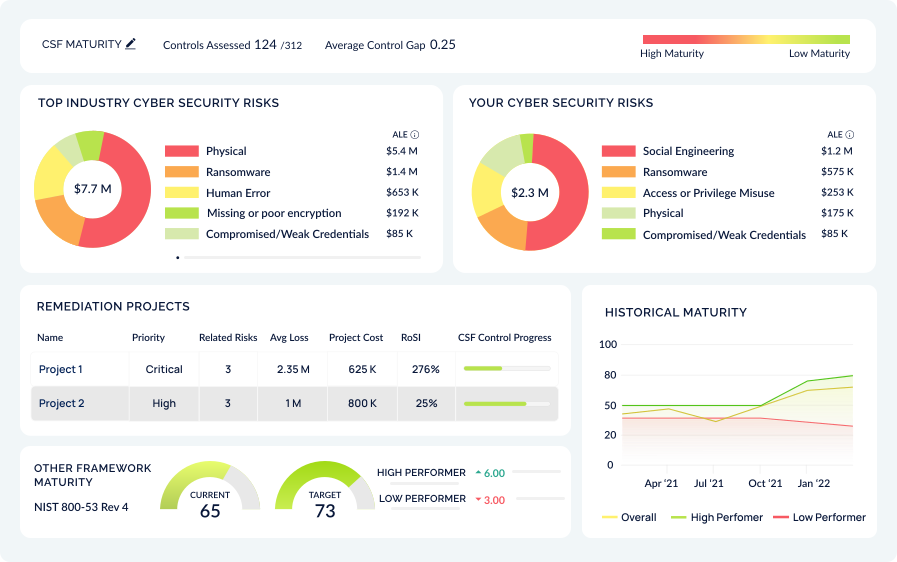
Board-ready reporting goes beyond dashboards and heat maps. It connects your control posture to potential financial losses, benchmarks your risk exposure against industry peers, and demonstrates return on security investment.
When your board asks about current risk exposure, you should answer with confidence rather than qualifying everything with "as of our last assessment." CyberSaint's Executive capabilties connects control posture with risks, risks with investments, and remediations with ROSI, giving you the complete story executives need.
How Do Framework Fragmentation Issues Block Progress?
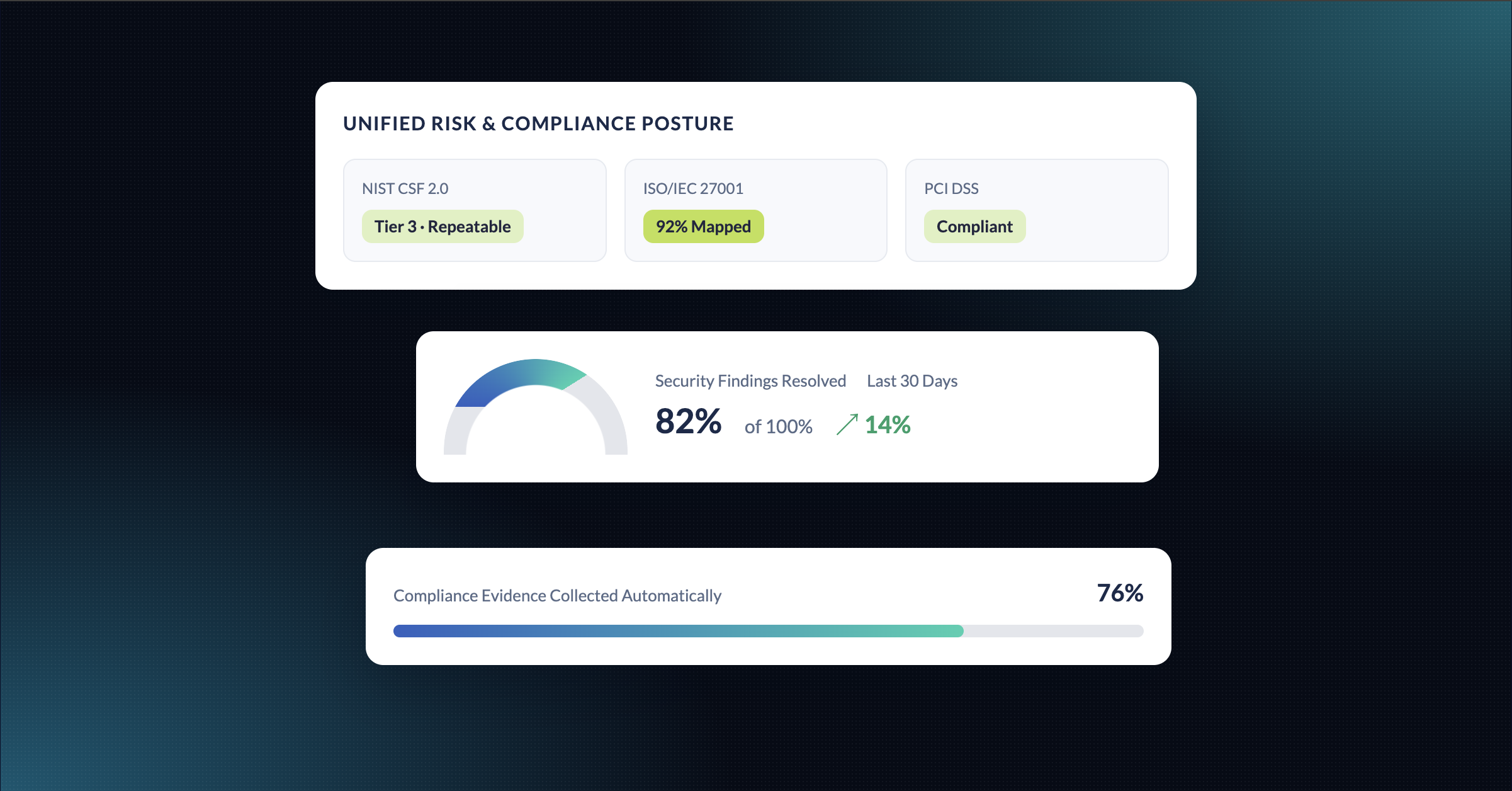
Your organization likely manages compliance across multiple frameworks. NIST CSF forms your cybersecurity foundation. ISO 27001 satisfies customer requirements. Industry-specific regulations add another layer of complexity. Each framework requires evidence, assessments, and reporting.
Without framework harmonization, teams repeat the same assessments with slight variations. A control that satisfies NIST CSF 2.0 may also satisfy ISO 27001 requirements, but tracking these relationships manually consumes valuable time.
This duplication creates what the industry calls "audit fatigue." Teams spend more time documenting compliance than improving security posture. Platform adoption suffers when the tool adds to this burden rather than reducing it.
What Does Effective Framework Crosswalking Look Like?
Effective crosswalking means assessing once and applying results across all applicable standards. When you document a control for NIST CSF, the platform should automatically map that evidence to corresponding ISO, PCI, and sector-specific requirements.
CyberSaint delivers this through AI-powered automated crosswalking. The platform harmonizes frameworks, allowing you to "assess once, use many" across hundreds of standards. This approach eliminates redundant work and frees your team to focus on actual risk reduction.

How Can You Overcome Cultural Resistance to Platform Adoption?
Technology alone doesn't drive adoption. People do. Even the most capable platform fails if teams view it as management surveillance rather than a tool that makes their jobs easier.
Cultural resistance often stems from past experiences with failed implementations. Teams remember the last platform that promised efficiency and delivered complexity. They've learned to protect their workflows from disruption.
Overcoming this resistance requires demonstrating value at every level. Security analysts need to see time savings. Compliance managers need to see reduced audit preparation. Executives need to see clearer risk visibility. Each stakeholder requires a different value proposition.
How Does TPRM Impact Platform Adoption?
Your risk posture extends beyond your own systems. Vendors, partners, and service providers introduce risk that many platforms fail to address adequately. When third-party risk management operates separately from your cyber risk program, you're missing a critical piece of the picture.
The Ponemon Institute estimates the average company shares confidential information with 583 third parties. Each relationship represents potential exposure that should factor into your overall risk quantification.
Platform adoption improves when third-party risk integrates with your broader cyber risk management efforts. This integration creates a single view of both internal control posture and external risk exposure.
How Do You Measure Platform Adoption Success?
Adoption success goes beyond login metrics and feature utilization. True success means the platform has become the authoritative source for risk decisions across your organization.
Track adoption through business outcomes rather than activity metrics. Has assessment time decreased? Are board presentations generated faster? Have you identified and remediated risks you would have missed with previous approaches?
These outcome-based metrics demonstrate platform value in terms executives understand. They also justify continued investment and expansion.
What Metrics Indicate Healthy Platform Adoption?
Healthy adoption shows up in multiple indicators. Assessment completion rates should increase while time per assessment decreases. The gap between compliance scores and actual security posture should narrow. Executive requests for risk data should route through the platform rather than triggering ad-hoc reporting projects.
Monitor integration health as well. Data should flow consistently from connected systems. Stale data indicates integration problems that will undermine trust in platform outputs.
How Can Centralized Platforms Address Adoption Barriers?
The most effective adoption strategy replaces fragmented tools with a centralized platform that connects compliance, risk quantification, and executive reporting. This consolidation eliminates the integration challenges that delay time-to-value.
A centralized approach means your compliance assessment data automatically informs risk calculations. Risk scores flow into executive dashboards without manual compilation. Remediation progress updates in real-time as controls improve.
CyberSaint built its platform around this connected model. From continuous compliance feeding to risk translation - each layer builds on the previous, creating a unified view of your cyber risk posture.
What Steps Should You Take to Fix Adoption in Your Organization?
Start by diagnosing your specific adoption barriers. Survey teams using the platform to identify friction points. Review utilization data to see which features go unused. Map the gap between platform capabilities and actual workflows.
Prioritize quick wins that demonstrate value. If assessment automation sits dormant, run a pilot with one compliance team. If executive reporting features go unused, build one board presentation using platform outputs. Success stories create momentum.
Address integration gaps systematically. Connect your highest-value data sources first. Establish data quality monitoring to catch integration failures early. Build confidence in platform outputs before expanding scope.
How to Drive Lasting Platform Adoption
Enterprise cyber risk platform adoption fails when organizations treat the tool as a technology project rather than a business transformation. Process barriers, data silos, integration complexity, and cultural resistance combine to undermine even the most capable platforms.
Success requires aligning platform capabilities with specific business outcomes, demonstrating value at every organizational level, and creating a unified view of cyber risk that connects technical controls to financial impact. Organizations that overcome these barriers gain real-time risk visibility, faster compliance cycles, and board-ready insights that drive strategic decisions.
Ready to see how CyberSaint addresses these adoption barriers? Explore how CyberStrong works or request a demo to see the platform in action.
FAQs About Enterprise Cyber Risk Platform Adoption
Why do enterprise cyber risk management platforms fail to gain adoption?
Platforms fail when they don't connect to existing workflows or deliver quick value. Teams revert to spreadsheets when integration takes months and results don't improve their daily work. CyberSaint addresses this by delivering insights within one week and reducing assessment time by 70%.
How can organizations overcome data silos that block platform adoption?
Start by connecting your highest-value data sources through direct APIs or data lake integrations. Prioritize vulnerability management and compliance data first. CyberSaint connects controls directly to risks and links security data to executive reporting, eliminating the silos that fragment risk visibility.
What makes executive reporting effective for driving platform adoption?
Effective executive reporting translates technical findings into financial terms. Boards need to understand potential losses, risk exposure compared to peers, and return on security investment. CyberSaint quantifies risk in dollars and cents using transparent models like FAIR and NIST 800-30.
How long should enterprise platform implementation take?
Extended implementations kill adoption momentum. Look for platforms that deliver initial value within days, not months. CyberSaint customers report being active and generating insights within one week or less, maintaining enthusiasm through rapid time-to-value.
How does framework fragmentation affect platform adoption?
Managing multiple frameworks creates redundant assessment work that drains team resources. Without automated crosswalking, teams assess the same controls multiple times. CyberSaint harmonizes frameworks through AI-powered mapping, allowing you to assess once and apply results across hundreds of standards.