

.png)
.png)
.png)
%201.png)
.png)
Financial institutions face overlapping requirements from SEC cyber disclosure rules, NYDFS cybersecurity regulations, and sector-specific mandates like DORA in Europe. When your compliance team juggles multiple frameworks while your security operations center monitors threats in real time, the gap between technical findings and boardroom reporting grows wider by the day.
CyberSaint delivers a cyber risk management platform that connects controls, compliance requirements, and financial risk quantification in one unified view. This guide breaks down the 6 criteria that matter most when evaluating NIST-aligned software for your institution.
By the end, you'll have a clear framework for selecting platforms that translate cyber risk into financial terms your CFO and board already understand.
Quick guide: 7 NIST Software Criteria for Financial Institutions
CyberSaint: The leading NIST-aligned platform for financial institutions requiring risk quantification and board-ready reporting
- Continuous Control Monitoring: Real-time visibility into control posture rather than point-in-time snapshots
- Framework Crosswalking: Automated mapping across NIST, ISO, PCI DSS, and regulatory requirements
- Cyber Risk Quantification Capabilities: Financial translation using FAIR, NIST 800-30, or actuarial models
- Evidence Collection Automation: Reducing assessment time through AI-powered telemetry integration
- Executive Reporting: Board-ready dashboards that communicate cyber posture in business terms
- Third-Party Risk Visibility: Inside-out and outside-in monitoring of vendor ecosystems
Critical Criteria for NIST Software
You already know that selecting the wrong cyber risk platform creates more work, not less. Spreadsheet-based assessments and fragmented tools leave your team scrambling before every audit cycle.
We evaluated software criteria based on what enterprise CISOs and risk leaders at financial institutions actually need: platforms that reduce noise, show where to focus first, and connect technical findings to business context. The criteria also reflect the regulatory pressures unique to banking, insurance, and investment firms.
- Regulatory alignment: Does the software map to FFIEC, NYDFS Part 500, SEC disclosure rules, and global standards?
- Financial translation: Can the platform express risk in dollars rather than heat maps?
- Operational efficiency: How much does automation reduce assessment timelines?
- Audit readiness: Does evidence collection happen automatically or require manual gathering?
- Executive communication: Can you generate reports that non-technical stakeholders understand?
- Integration depth: Does the platform connect to your existing security ecosystem?
- Scalability: Will the solution grow with your institution's complexity?
The 6 NIST Software Platforms for Financial Institutions
CyberSaint: The Platform that Unifies NIST Compliance for Financial Institutions
Financial institutions need more than a compliance checkbox. You need a platform that connects security operations to executive-level decisions without requiring weeks of manual consolidation.
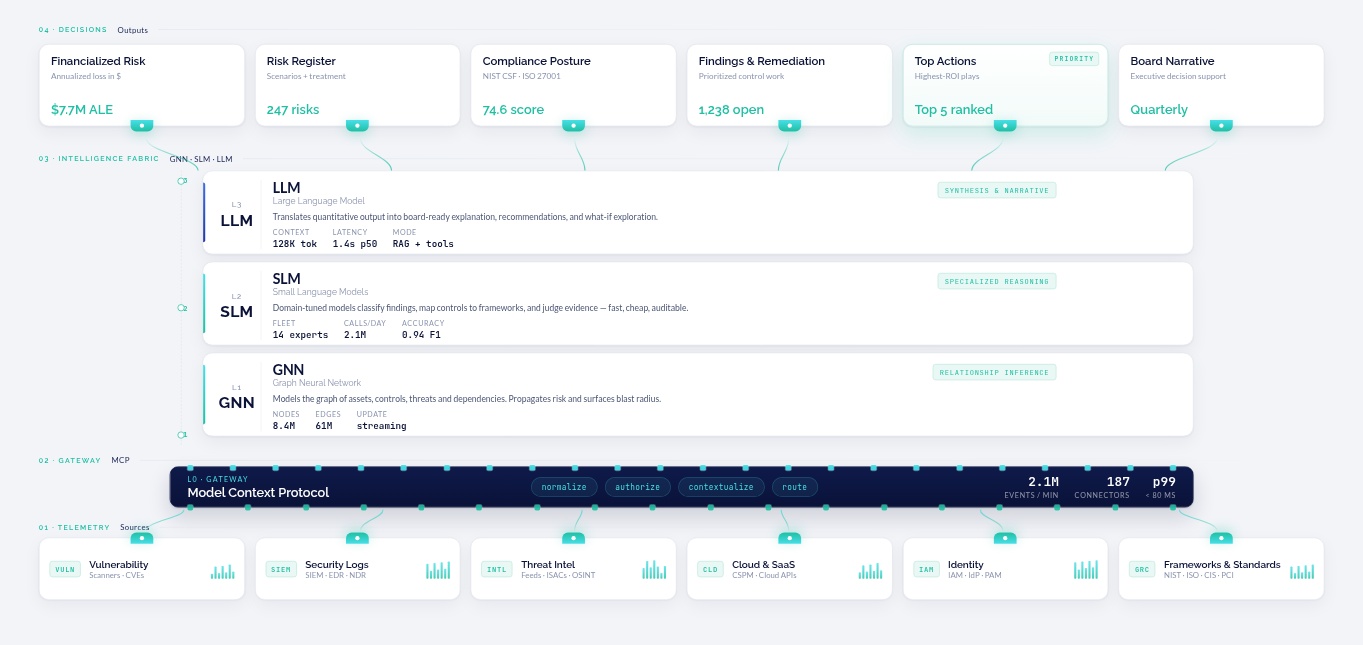
The CyberStrong platform was purpose-built for enterprise cyber risk management, not bolted onto another IT function. The platform links controls to risks for real-time visibility into your institution's cyber posture, while translating technical risk findings into dollar amounts.
According to customer reports, CyberSaint delivers an average 70% reduction in assessment time. That rapid deployment matters when compliance deadlines don't wait. Customers report being active and generating insights in one week or less.
CyberSaint features
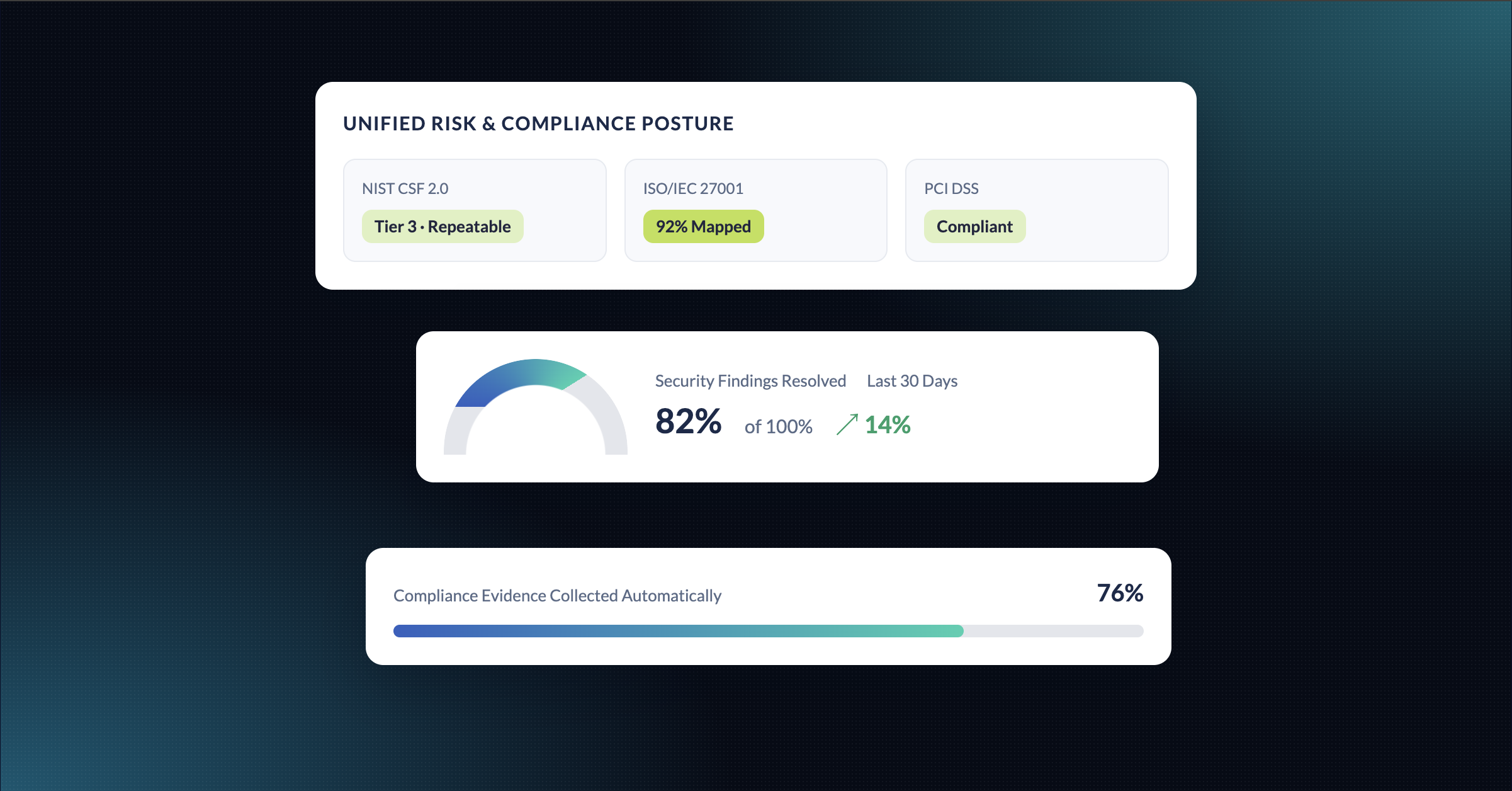
- Automated Framework Crosswalking: Assess once, map to multiple frameworks. CyberSaints AI mapping connects NIST Cybersecurity Framework to PCI DSS, ISO 27001, FFIEC, and sector-specific regulations without duplicate effort.
- Model-Agnostic Risk Quantification: FAIR, NIST 800-30, and actuarial models translate cyber risk into financial exposure. This financial translation helps you justify security budgets and demonstrate ROI.
- Real-Time Control Monitoring: Telemetry integration keeps assessments current rather than reflecting last quarter's snapshot. When your board asks about current risk exposure, you can answer with confidence.
- Agentic Evidence Collection: Autonomous agents gather evidence across your security ecosystem without requiring a centralized data lake. This approach addresses what a 2025 RegScale study calls the burden of repetitive assessments.
- Board-Ready Executive Reporting: Dashboards communicate risk posture in terms CFOs and directors understand, transforming budget conversations from "we need more security spend" to "this investment reduces a $3.2M exposure to $800K."
- Benchmarking Against Peers: The world's largest cyber loss dataset provides industry-specific context, so you know how your risk posture compares to similar financial institutions.
CyberSaint pros and cons
Pros:
- Single platform unifying assessment, quantification, and executive reporting for financial services
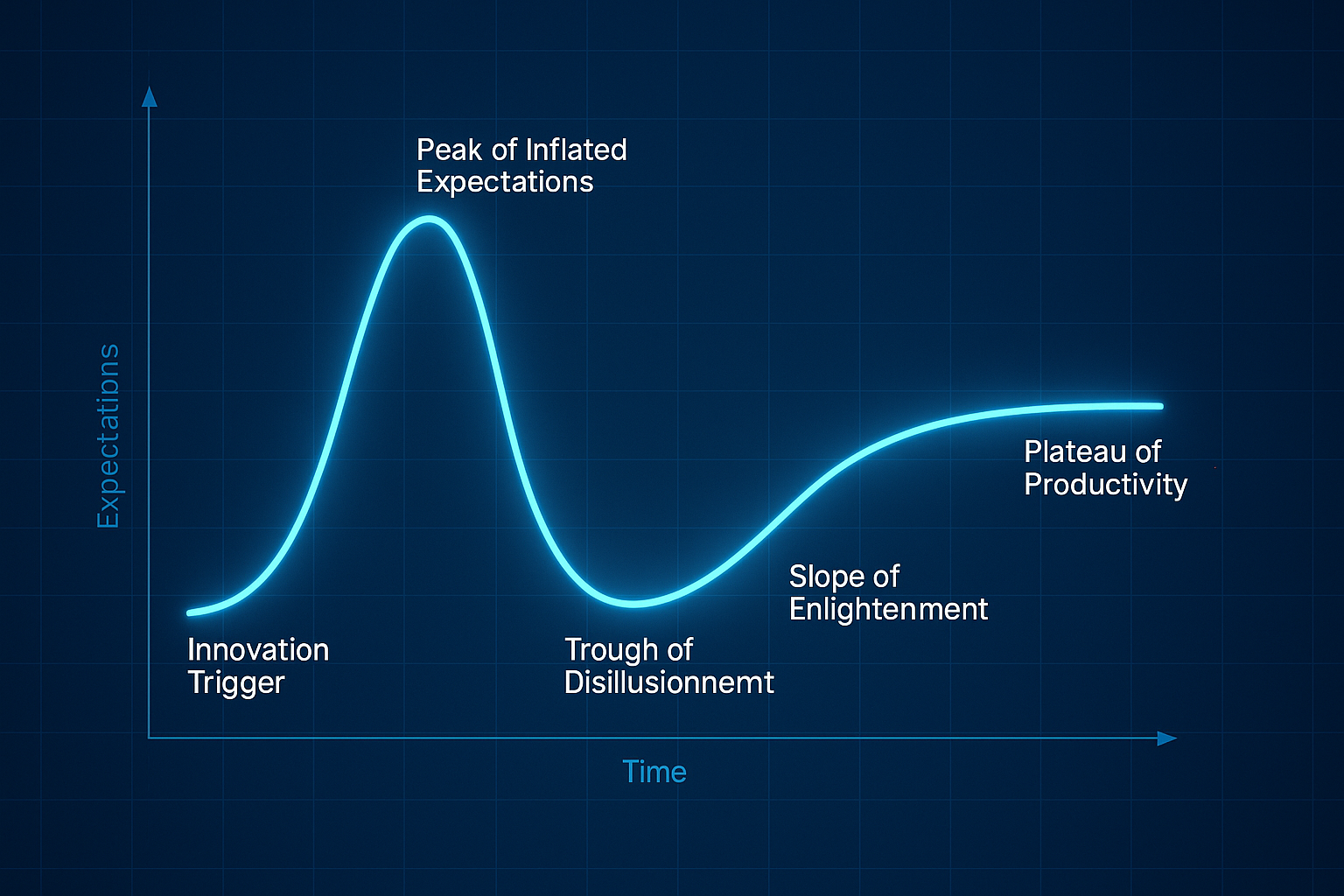
- Recognized in the 2024 Gartner Hype Cycle for Cyber Risk Management as a sample vendor for Cyber GRC, Cybersecurity CCM, Third-Party Cyber Risk Management, and AI.
- Implementation timelines measured in days, not months, with customers active within one week
Cons:
- Deep customization may require initial onboarding conversations to align with existing workflows
- Full feature utilization benefits from integration with existing security telemetry sources
- Organizations with very basic compliance needs may find enterprise-grade capabilities exceed their immediate requirements
1. Continuous control monitoring: Why point-in-time assessments fall short
Annual or quarterly assessments tell you where your controls stood weeks or months ago. In an environment where threats evolve daily and configurations drift constantly, that static view creates blind spots.
Real-time control monitoring ensures your risk register reflects current reality, not historical assumptions. When regulators ask about your posture, or when an incident demands immediate context, you need data from today.
Continuous control monitoring features
- Telemetry Integration: Pulling data from SIEM, vulnerability scanners, and identity systems to update control scores automatically
- Drift Detection: Alerting when configurations change, or controls degrade below acceptable thresholds
- Automated Scoring: Calculating control effectiveness based on live data rather than self-reported questionnaires
2. Framework crosswalking: Reducing duplicate compliance efforts
Your institution likely faces requirements from NIST CSF, FFIEC CAT, PCI DSS, ISO 27001, NYDFS Part 500, and potentially DORA. Without framework crosswalking, you assess the same controls multiple times for different auditors.
Crosswalking capabilities let you assess once and map results across all applicable standards. This approach reduces manual effort and ensures consistency in how you report control effectiveness.
Framework crosswalking features
- Pre-Built Mappings: Standard relationships between NIST subcategories and other framework requirements, validated by compliance experts
- Custom Mapping Support: Ability to add institution-specific controls or emerging regulatory requirements
- Gap Analysis Across Frameworks: Visibility into where a single control gap affects multiple compliance obligations.
3. Cyber Risk Quantification: Translating risk into financial metrics
When board leaders ask about risk exposure, they expect answers in dollars, not severity scores. Cyber risk quantification (CRQ) bridges the gap between technical findings and financial decision-making.
Cyber risk modeling helps you justify security budgets, compare mitigation options by ROI, and communicate with executives who think in terms of balance sheets and income statements.
Risk quantification features
- FAIR Model Support: Factor Analysis of Information Risk provides quantitative, financial outputs based on loss event frequency and magnitude
- NIST 800-30 Integration: Qualitative-to-quantitative translation for organizations scaling their maturity
- Scenario Modeling: What-if analysis comparing the financial impact of different mitigation investments
4. Evidence Collection Automation: Reducing Manual Compliance Burdens
If you're responsible for cybersecurity assessments at your institution, you've likely spent hours collecting screenshots, chasing down documentation, and manually scoring controls across multiple frameworks.
According to a 2025 study from RegScale, 53% of organizations dedicate the equivalent of one full-time employee exclusively to gathering evidence. Automation reclaims that time for higher-value analysis and remediation work.
Evidence collection automation features
- API-Based Collection: Direct integration with security tools to pull evidence automatically
- Scheduled Gathering: Regular evidence refresh without manual intervention
- Audit Trail Maintenance: Timestamped records showing when and how evidence was collected
5. Executive reporting: Board-ready Insights that Drive Decisions
CISOs simply don't have enough time to translate every technical finding into language the board understands. When reporting on potential financial impact, you cannot afford to say "I don't know" when directors ask where calculations come from.
Effective executive reporting presents risk posture, trends, and investment recommendations in formats that resonate with non-technical stakeholders.
Executive reporting features
- Visual Dashboards: Risk posture displayed through charts and metrics executives recognize
- Trend Analysis: Progress over time showing risk reduction correlated with security investments
- Benchmark Comparisons: How your institution's posture compares to industry peers
6. Third-party Risk Visibility: Managing Vendor Ecosystem Exposure
Your institution's security posture extends beyond your own controls. Third-party service providers introduce risks that regulators increasingly expect you to monitor and manage.
In October 2025, NYDFS released updated guidance on managing risks related to third-party service providers, reinforcing that financial institutions must maintain visibility into their vendor ecosystem's security posture.
Third-party risk visibility features
- Vendor Assessment Workflows: Standardized questionnaires and scoring for third-party evaluations
- External Monitoring: Outside-in visibility into vendor security ratings and incident signals
- Concentration Risk Analysis: Identifying where multiple critical functions depend on shared vendors
Understand more about Third-Party Risk Intelligence here.
Compare the 7 NIST Software Criteria
| Criteria | CyberSaint | Standard GRC Platforms | Point Solutions |
|---|---|---|---|
| Financial Risk Quantification | ✓ FAIR, NIST 800-30, Actuarial | Limited | ✗ |
| Real-Time Control Monitoring | ✓ | Periodic | ✗ |
| Automated Framework Crosswalking | ✓ | Manual | ✗ |
| Board-Ready Reporting | ✓ | Partial | ✗ |
| Time to Value | Days | Months | Weeks |
How does NIST CSF 2.0 Affect Operations?
The updated NIST Cybersecurity Framework 2.0 introduces a new Govern function that emphasizes organizational context, risk management strategy, and supply chain risk management. For financial institutions, this addition aligns with existing regulatory expectations from FFIEC and NYDFS.
NIST CSF 2.0 operates as what financial services leaders call a "Rosetta Stone," translating sector-specific risk management language into a common vocabulary. The framework creates shared understanding among compliance, security, and executive teams around risk management terms and approaches.
Your institution can use CSF 2.0 to define your current cybersecurity posture, describe your target state, identify gaps, and build communications among stakeholders. The framework complements rather than replaces existing compliance requirements.
What Should Financial Institutions Look for in NIST Compliance Software?
Beyond the seven criteria outlined above, consider how a platform handles implementation and ongoing operations. Vendors that require months of deployment delay your time to value and consume resources you've already stretched thin.
Look for platforms that connect security operations to compliance workflows, so assessments stay current without manual synchronization. The software should reduce friction in your existing processes rather than adding another tool your team must maintain separately.
Integration depth matters significantly. A platform that connects to your SIEM, identity systems, and vulnerability scanners can automate evidence collection. A platform that operates in isolation requires duplicate data entry and manual reconciliation.
Why CyberSaint is the Leading NIST Platform
CyberSaint stands apart by unifying the entire risk lifecycle into one platform. Rather than bolting cyber risk onto a broader IT service management system, CyberSaint was purpose-built for the challenges financial institutions face.
The platform translates technical risk into financial terms that boards and regulators expect. When you need to justify security investments or report on your institution's cyber posture, CyberSaint delivers board-ready insights without weeks of manual preparation.
CyberSaint's approach to framework crosswalking means you assess controls once and map results across NIST CSF, FFIEC, PCI DSS, and other regulatory requirements. This efficiency matters when your compliance team manages multiple overlapping obligations with limited resources.
Ready to see how CyberSaint unifies your compliance and risk programs? Request a demo to explore the platform firsthand.
FAQs about 6 NIST Software Criteria for Financial Institutions
What is NIST-aligned cyber risk management software?
NIST-aligned cyber risk management software helps financial institutions assess, monitor, and report on their cybersecurity posture using the NIST Cybersecurity Framework as the foundation. CyberSaint automates mapping across NIST CSF functions and connects controls to financial risk quantification.
These platforms differ from generic compliance tools by focusing specifically on cyber risk rather than broad governance functions.
Why do financial institutions need dedicated NIST software?
Financial institutions face unique regulatory pressures from SEC, NYDFS, FFIEC, and PCI DSS requirements. CyberSaint addresses these overlapping obligations through automated framework crosswalking that reduces duplicate assessment efforts.
Generic GRC platforms often lack the cyber-specific risk quantification and control-monitoring capabilities regulators increasingly expect.
How does cyber risk quantification help financial institutions?
CRQ translates technical security findings into dollar amounts. CyberSaint uses FAIR and actuarial models to express risk exposure in financial terms, helping CISOs justify budgets and communicate with boards.
When you present risk as "this vulnerability represents $2.4M in potential exposure," executives understand the stakes immediately.
What frameworks should NIST software support for financial services?
At minimum, look for support for NIST CSF 2.0, FFIEC CAT, PCI DSS, ISO 27001, and NYDFS Part 500. CyberSaint supports hundreds of frameworks with automated crosswalking, so a single assessment maps across all applicable requirements.
European operations may also require DORA alignment.
What is continuous control monitoring in NIST compliance?
Continuous control monitoring replaces periodic assessments with real-time visibility into control effectiveness. CyberSaint integrates with your security ecosystem to keep control scores current based on live telemetry rather than quarterly questionnaires.
This approach ensures your risk register reflects today's posture, not last month's assumptions.