

.png)
.png)
.png)
%201.png)
.png)
Cybersecurity has matured significantly over the past decade. Most enterprise cyber risk management programs now operate with sophisticated tooling, continuous monitoring, formalized governance models, and structured risk management processes. Yet one challenge remains persistent across industries and companies of varying levels of digital maturity: translating cyber risk into language that resonates in the boardroom.
Too often, cyber risk reporting is dense with operational metrics but light on business meaning. CISOs walk into meetings with board members equipped with dashboards, maturity heat maps, vulnerability counts, and control updates, but leave with the uneasy sense that their message did not fully land. The issue is rarely the quality of the slides or the sophistication of the data. It is the framing of the risk in the broader business context.
Effective board-level cyber risk reporting is not about presenting more data. It is about presenting the right data, in the right language, aligned to governance priorities, enterprise goals, and the organization’s risk tolerance. Risk appetite and tolerance involve formally defined thresholds approved by leadership that dictate which risks are acceptable. Informed decision-making bridges the gap between technical teams and executives, allowing for resource allocation based on enterprise-wide impact. When done well, it builds credibility with senior executives, informs capital allocation decisions, strengthens board engagement, and elevates the CISO from technical operator to enterprise risk leader.
Why Board-Level Reporting on Cybersecurity Breaks Down
Board discussions often falter because the metrics being presented are not the metrics directors are accountable for.
Technical metrics do not inherently translate into business insight.
Reporting patch compliance, reductions in phishing click rates, or decreases in critical vulnerabilities may reflect operational progress for security teams.
However, those figures do not directly answer the key questions directors are implicitly asking:
- What is our exposure?
- What is the potential financial impact of a material cyber event?
- How does this affect business performance?
- Are we managing cyber risk in alignment with our stated risk tolerance?
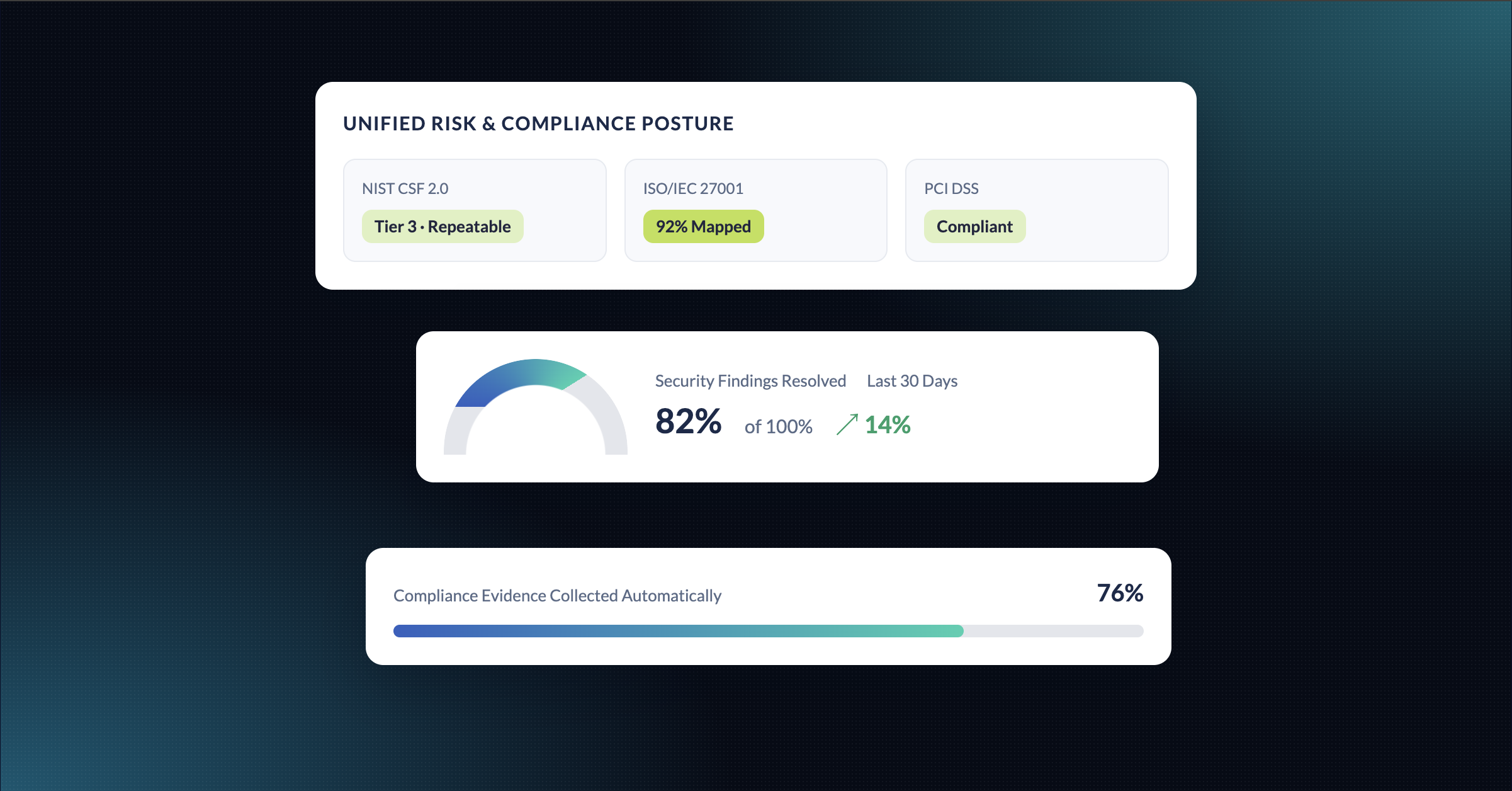
This disconnect is especially pronounced when organizations rely heavily on maturity scores. A statement such as “We are a 3.4 out of 5 on NIST CSF” may indicate internal progress in security controls, but it lacks economic and strategic context. Board members are responsible for oversight of enterprise risk management and capital stewardship. A maturity score without an explanation of financial exposure, asset concentration, or impact on critical assets offers limited decision support.
Another common failure point in cybersecurity reporting is static assessment. Quarterly snapshots provide a moment-in-time view of control effectiveness, but they do not illustrate how exposure evolves as cloud adoption expands, digital assets multiply, third-party risk grows, or new cyber threats emerge across the network. Risk changes continuously as infrastructure evolves, employees adopt new technologies, and threat actors adapt tactics. When board-level cyber reporting does not reflect that dynamism, it can appear disconnected from operational reality and from the organization’s broader risk profile.
What Boards Actually Care About: Cybersecurity Risk
To improve CISO board communication, it is essential to align with what boards, senior management, and teams are truly focused on: financial exposure, trade-offs, accountability, and confidence in decision-making.
Financial exposure sits at the center of governance oversight. Directors and the CEOs want to understand the magnitude and likelihood of potential losses across varying levels of impact. They want clarity on probable consequences from ransomware, supply chain compromise, cloud misconfiguration, insider threat, and data exfiltration affecting regulated data. Translating cyber risk into estimated loss ranges, operational downtime, remediation efforts, and revenue impact transforms cyber risk reporting from technical commentary into enterprise risk management analysis.
Boards also evaluate trade-offs. Every security investment competes with other operational initiatives. Funding cloud segmentation may delay the expansion of analytics. Expanding security controls may reduce short-term business velocity. Board-level cybersecurity program reporting must illuminate these trade-offs by connecting investment to measurable reductions in exposure. Boards need contextualized analysis that shows how different funding scenarios affect the organization’s risk profile and business goals.
Equally important is confidence. Board members do not expect zero risk; they expect disciplined risk management, effective communication, and evidence of program effectiveness. Confidence emerges when cyber risk KPIs and KRIs, key performance indicators, and key risk indicators are clearly defined, consistently applied, and trended over time. When methodologies remain stable and assumptions are transparent, boards gain assurance that cybersecurity programs are managed systematically rather than reactively.
Turning Cyber Risk Reports Into Board Engagement
Improving cybersecurity reporting requires a structural shift. Instead of leading with technology deployments or regulatory updates, effective board-level reporting begins with scenario analysis, asset exposure, and financial impact.
Financial impact modeling is foundational to modern cyber risk management. While no model eliminates uncertainty, articulating probable loss ranges tied to defined scenarios creates a shared language between security leaders and stakeholders.
Cyber risk quantification is the go-to approach for modeling cyber risk in business terms. CyberStrong takes a flexible, model-agnostic approach to CRQ by offering multiple models for risk analysis - from NIST 800-30 to FAIR to custom models. CyberStrong offers the most complete quantitative scoring approach on the market, while tying every risk to controls.
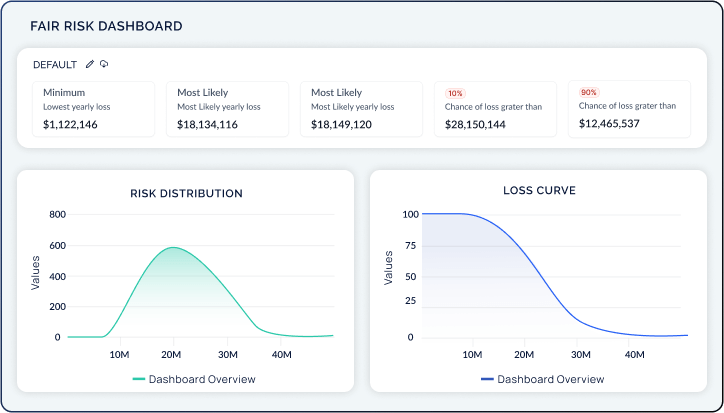
For example, rather than stating that multifactor authentication has been deployed across 80 percent of digital assets, the CISO might explain that the initiative reduced modeled exposure in credential-based attack scenarios by a measurable percentage across critical systems. This reframes the conversation around risk reduction and effectiveness rather than tool implementation.
Scenario-based thinking strengthens executive decision-making. Directors routinely assess geopolitical, operational, and financial risk scenarios. Cybersecurity risk should be presented similarly, outlining the affected business processes, expected incident-response timelines, likely remediation efforts, customer and regulatory implications, and projected financial risk. This approach enables informed actions rooted in measurable risk metrics.
Benchmarking against peer companies and member firms within the same sector adds credibility. Organizations operate within broader threat landscapes influenced by industry-specific attack patterns and regulatory obligations. Value-add communication integrates external data sources to determine how the organization compares in terms of security posture and incident frequency.
When business leaders see comparative information, it contextualizes the organization’s risk and clarifies where additional support or investment may be required.
Measuring Risk Management Performance Across Critical Assets
Once cyber risk is expressed in financial and scenario-based terms, performance measurement becomes more meaningful. Rather than focusing on tool counts, organizations can measure risk reduction, control efficacy, and improvement in risk metrics over time.
Risk reduction should be trended across defined scenarios affecting critical assets. If ransomware risk decreases year over year due to improved segmentation, backup resilience, and network monitoring, that trajectory should be visible in board-level communication. Continuous control monitoring and improved visibility across cloud and on-prem environments enable organizations to measure this change with greater precision.
Return on Security Investment (RoSI) reframes funding conversations within enterprise risk management. Boards allocate capital based on expected value and impact. When CISO board communication demonstrates that a specific initiative reduced modeled exposure by a measurable amount relative to cost, it aligns cybersecurity investment with business goals.
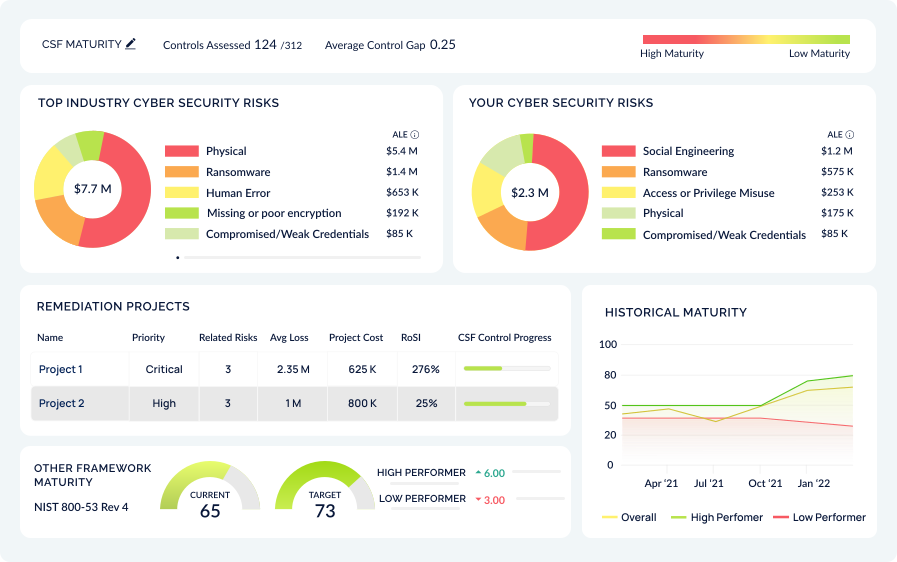
Artificial intelligence introduces additional complexity in measurement. Boards increasingly expect organizations to determine whether AI-driven detection, automation, and response capabilities improve efficacy. Measuring AI ROI may include reductions in response times, decreases in critical vulnerabilities persisting beyond defined thresholds, improved remediation efforts, and lower residual risk across key scenarios. While not every improvement directly translates to revenue impact, disciplined measurement strengthens board engagement and executive confidence.
Ultimately, actionable metrics and key risk indicators (KRIs) should help contextualize past performance trends and financial quantification of potential losses. KRIs enable you to monitor and quantify cyber risk so that you can initiate quick remedial action. Linking KRIs to KPIs enables business managers to appreciate the relationship between risk and business performance.
How Security Leaders Design Risk Metrics That Matter
Effective executive reporting focuses on a defined set of measurable indicators that connect operational performance to enterprise exposure. It also addresses regulatory gaps: Cybersecurity reporting enhances regulatory compliance by providing the necessary documentation to meet industry standards. Continuous monitoring of risk metrics is essential for both risk management and compliance reporting.
These indicators may include residual exposure across top-risk scenarios, the percentage of critical assets meeting recovery objectives, third-party risk concentration across key vendors, reductions in critical vulnerabilities within defined timeframes, and changes in overall security posture relative to executive goals. KPIs and KRIs should be mapped directly to objectives and organizational context to ensure clarity.
Simplicity enhances influence. Overly technical reporting dilutes communication and undermines the shared language necessary for informed decisions.
From Reporting to Strategic Influence & Effective Communication
The ultimate goal of cybersecurity reporting is not compliance read-outs. It is the overall alignment and influence over enterprise risk management decisions.
When risk is connected across systems, continuously updated, and quantified in financial terms, funding conversations change. Rather than defending security spend, security leaders can demonstrate how investments enable measurable reductions in risk and facilitate business resilience.
Connected reporting integrates telemetry from security controls, third-party risk assessments, cloud environments, network monitoring, and frameworks into a unified model. Continuous measurement provides visibility into posture shifts between reporting cycles. Quantified analysis allows boards to understand how cybersecurity risk compares to other enterprise risks managed by senior management.
In this environment, CISO board communication evolves from reactive status updates to proactive strategic guidance. Discussions focus on objectives, trade-offs, and forward-thinking planning rather than isolated findings.
For organizations seeking to strengthen board-level communication and enhance strategic alignment, adopting a connected, continuous, and quantified risk management framework is a practical next step. Mature reporting empowers boards, facilitates responsible oversight, and enables the organization to navigate evolving cyber threats with confidence.
If you are ready to elevate your reporting and transform how your organization communicates security performance to the board, request the Cyber Risk Management Playbook or schedule a demo to see how structured, data-driven risk management can facilitate informed decisions at the highest levels of leadership.