

.png)
.png)
.png)
%201.png)
.png)
For years, IT discourse has been centered on cybersecurity. Yet, as the volume of cyberattacks increases, professionals have developed a more holistic approach to cybersecurity. This development has led to the creation of cyber risk management. You may be wondering whether the distinction between cybersecurity and cyber risk management is necessary, and the answer is yes.
Cybersecurity and cyber risk management are related concepts, but they are not interchangeable. The main difference is the scope of these two concepts.
Cybersecurity v. Cyber Risk Management
Cybersecurity is the practice of protecting digital and IT assets, systems, and networks from cyber threats. This process includes implementing safeguards against unauthorized access, data breaches, attacks, and other cyber risks. Cybersecurity is focused on the technical measures and controls that are put in place to prevent, detect, and respond to cyber threats. It is often very technical and involves deploying several endpoint solutions. Examples include antivirus software, threat detection systems, firewalls, and cloud infrastructure protection.
The scope of cybersecurity is focused on the active protection of assets from threats. Cyber risk management focuses on taking a step back to assess the strategies and operations that impact the organization and its existing security posture. Cyber risk management has been the answer security professionals have been searching for, as cyber threats have grown and senior leadership has increased scrutiny of security operations.
Cybersecurity is a subset of cyber risk management. Cyber risk management includes cybersecurity as one of its components. It considers the overall business risks related to cyber threats and develops strategies to manage them effectively. It's about aligning an organization's cyber defenses with its business objectives and risk tolerance.
Cyber risk management takes a more holistic approach than cybersecurity's more technical, endpoint-focused approach. Risk management involves understanding the potential impact of cyber threats on an organization's operations, reputation, financial stability, and regulatory compliance. This broader perspective encompasses technical safeguards, organizational policies and processes, employee training, compliance efforts, vendor assessments, and incident response planning.
By grounding cyber in a business context, CISOs and other security leaders can report to the Board and senior management on how security will impact the organization. An organization that does not consider cyber a core part of the business is ill-prepared to defend against cyber threats, regardless of the number of endpoint solutions they've deployed.
Read more: Drive Cybersecurity Strategy with a CISO Dashboard.
Security professionals need to consider several essential processes when developing a cyber risk management plan. Keep reading to understand what you must do to establish your cybersecurity risk management plan.
The Essentials of a Cyber Risk Management Plan
While this list may seem extensive, there are no shortcuts for managing cybersecurity risks. Instead, security professionals should seek automated platforms that help teams do more with their time and resources.
-
Understand Your Organization's Business Objectives and Risks:
-
This step includes identifying your business's goals, risks, and critical assets. Security teams should also identify existing security risks and potential security threats.
-
Identification is crucial, as it becomes the starting point for where cyber risk operations can grow and determines what needs to be done and what needs to be protected.
-
Risk identification involves creating an inventory of all digital assets, identifying potential threats and vulnerabilities, and determining the impact of a security breach.
-
-
-
Perform Cyber Risk Assessments:
-
Conduct cyber security risk assessments to identify significant risks and quantify potential impact and likelihood. Security and risk teams can leverage cyber risk quantification models like FAIR and NIST 800-30 to financialize cyber risk.
-
Cyber risk quantification helps security teams prioritize risks based on their potential harm to the organization and likelihood of occurrence. It improves risk management decisions by translating them into business terms. Threats that can cost the organization the most should be prioritized higher.
-
Security practitioners must regularly perform cyber risk assessments to ensure that security teams make informed decisions based on current information.
-
Organizations should conduct threat and vulnerability analysis to identify potential threats like malware and phishing, while assessing the impact of a security breach on their operations.
-
-
Define Your Organization's Risk Tolerance:
-
Along with quantifying cyber risk, your security teams must determine the organization's risk tolerance. There can be a degree of risk that the organization can accept and afford. If the quantified risk is within a tolerable range, organizational leaders can accept it, further deprioritizing it in favor of risks that need more resources or attention.
-
Align the risk appetite with the organization's overall business goals.
-
-
Develop Risk Mitigation Strategies:
-
This step involves developing and implementing strategies to reduce the identified risks. These strategies may include technical controls, process improvements, training, etc to reduce risk and is an iterative, ongoing process.
-
Risk prioritization should consider exploit availability and business criticality, not just the severity of vulnerabilities and threats. This can be supported with AI-powered Finding Management, which surfaces your organization's most pressing security findings, organized in rank order based on financial impact.
-
-
Consider a multi-layered approach that addresses people, processes, and technology.
-
Cybersecurity insurance can be used to transfer residual risk that cannot be completely mitigated.
-
Leverage risk remediation tools like CyberSaint's Risk Remediation Suite to help security practitioners communicate and prioritize opportunities for risk reduction to senior leadership by addressing risk and control remediation in financial terms.
-
-
Determine an Incident Response Plan:
-
An organization should have a well-defined incident response plan for cyber incidents or data breaches. This plan outlines the steps to take when an incident occurs, including containment, threat eradication, recovery, and communication.
-
NIST has developed best practices for creating an incident response plan that helps security teams structure a repeatable and coordinated process. This step ensures that all involved parties have defined roles, responsibilities, and action items to refer to in the event of a breach.
-
-
Testing and Simulation:
-
Conduct tabletop exercises and simulations to test the effectiveness of the incident response plan and identify future areas for improvement.
-
-
Continuous Monitoring:
-
As mentioned earlier, cyber risk management is a holistic process, which means it's also ongoing. Monitoring systems, networks, and control changes are crucial to detecting and responding to new threats and vulnerabilities. Security professionals should review previous incidents to identify weaknesses and what could have been done differently, and implement the necessary changes.
-
Continuous monitoring tools provide real-time visibility into digital asset exposures and detect suspicious activity.
-
-
Continuous monitoring helps ensure compliance with evolving regulatory requirements by regularly assessing security controls. Ongoing monitoring of compliance with regulatory requirements is crucial to avoid penalties for non-compliance.
-
Explore our automated approach to continuous monitoring with Control Score Automation powered by CCM.
-
Continuous monitoring applies to control monitoring and involves regularly reviewing and updating the cyber risk management plan in response to new threats, changes in the business environment, and lessons learned from incidents.
-
-
Employee Training and Awareness:
-
Employees play a vital role in maintaining cybersecurity. Training and awareness programs help staff educate on best practices, threats and tactics to watch for, and proper handling of sensitive information.
-
Organizations can develop weekly newsletters and offer training sessions and Q&As to keep employees updated.
-
-
Vendor and Third-Party Risk Management:
-
Cyber risk management extends beyond managing organizations. Proper cyber risk management includes regular assessments of third-party vendors and partners to protect the organization and all related entities equally. Assessing these entities' cybersecurity posture is vital to ensure their practices align with the organization's security standards.
-
Failure to consider the cyber risk posture of third-party organizations can lead to a domino effect if a cyber attack targets vendors or partners.
-
CyberSaint has partnered with IBM to streamline third and fourth-party risk management. With this strategic partnership, organizations can unify first, third, and nth-party risk management strategies into one powerful solution.
-
-
Communicating & Reporting to Senior Leadership:
-
Board interest and scrutiny of cyber operations have skyrocketed, as cybersecurity has become a business's core functioning. Senior management wants to know what is happening, what to invest in, and what can be done to continue improving and growing.
-
CISOs, CIOs, and security leaders should leverage cybersecurity reporting tools to deliver data-backed and action-oriented cybersecurity reports relevant to business goals and operations.
-
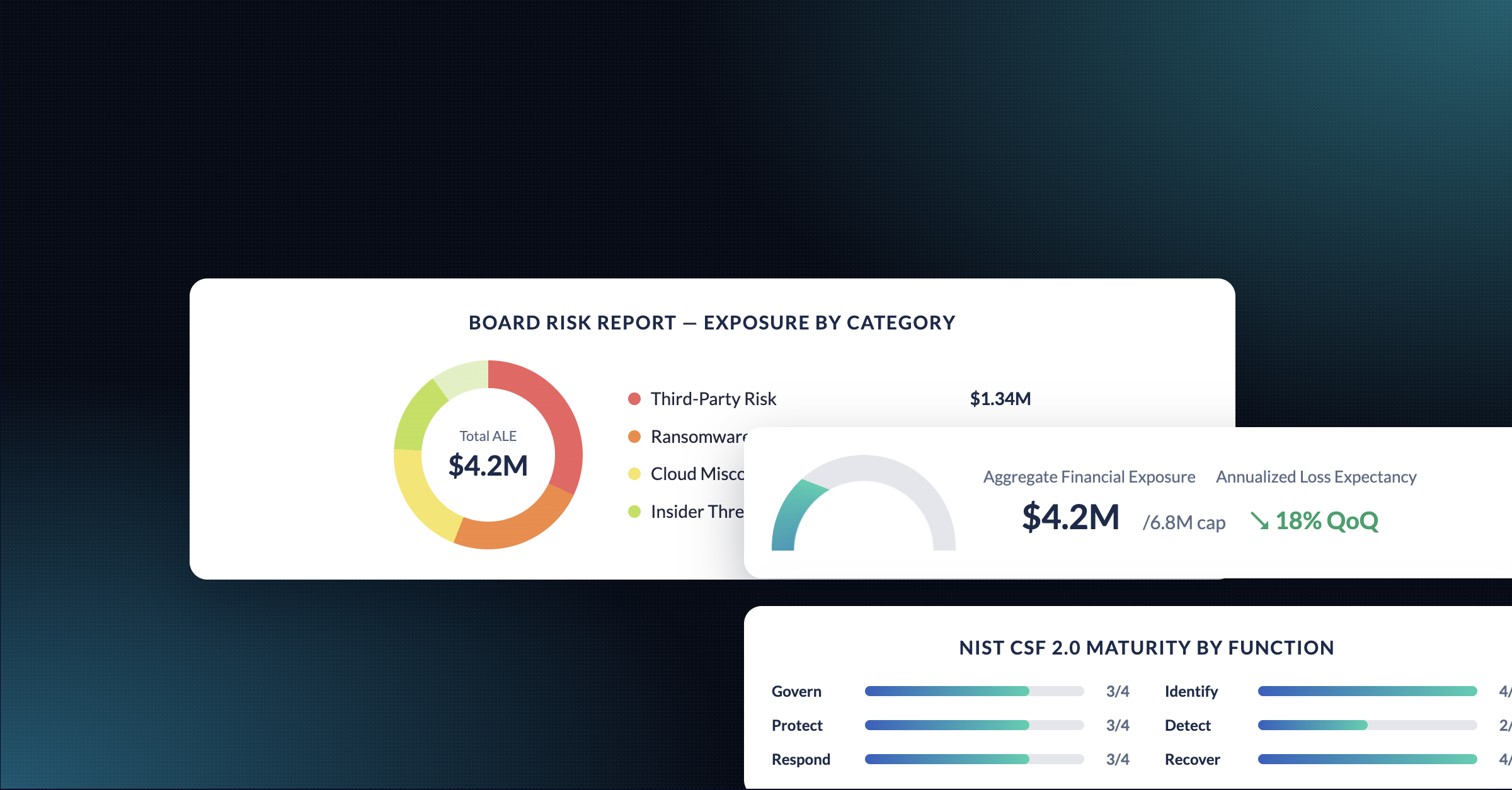
Establish clear communication channels for changes in security posture, remediation efforts, and compliance. Keep stakeholders informed about the organization's cybersecurity efforts and any changes to the plan. It's critical to deliver reports based on the most current information. Security leaders should use real-time dashboards, such as CyberStrong's Executive Dashboard.
-
Common Cybersecurity Risk Management Frameworks to Consider
-
The NIST Cybersecurity Framework (CSF) contains 108 recommended security actions across five critical security functions.
-
The NIST CSF helps organizations better manage and reduce cyber risk of all types, and is applicable for organizations across all verticals.
-
Organizations can also use NIST 800-53 for common controls to establish a mature cyber risk management process.
-
-
ISO/IEC 27001 is the international standard for information security management.
-
The NIST Risk Management Framework (RMF) integrates security, privacy, and cyber supply-chain risk management activities into an organized framework.
A Robust Cyber Risk Management Plan
Developing a cyber risk management plan that includes each listed process is vital to the success of your organization's cyber and business operations. Based on your organization's maturity, size, and resources, security teams must build their cyber operations to include all 10 essentials.
Schedule a demo with our team to learn how CyberStrong, our all-in-one cyber risk management solution, can help your security team do more with less.