

.png)
.png)
.png)
%201.png)
.png)
Continuous compliance is one of the most consequential capabilities a large enterprise can build. The promise is real: automated evidence collection, real-time control monitoring, always-on audit readiness, and risk visibility that reaches the boardroom. For organizations managing dozens of frameworks across complex, distributed environments, it replaces the annual audit scramble with a defensible, operationalized program.
But continuous compliance platforms don’t automatically deliver on that promise. Too many enterprise implementations stall within months, dashboards go unused, control owners return to spreadsheets, and audit prep becomes just as painful as before. The problem isn’t the concept. The problem is how platforms are selected, configured, and deployed, and whether they’re architected to handle enterprise scale in the first place.
This article covers two questions enterprise security and compliance leaders are asking right now:
- What actually causes continuous compliance software to fail at large enterprises?
- Which continuous compliance platforms are best suited to large organizations?
Understanding the failure modes will help you evaluate platforms with better questions. And understanding which platforms solve those failure modes will point you toward an implementation that sticks.
Part 1: What Causes Continuous Compliance Software to Fail at Large Enterprises?
Most compliance automation projects don’t fail because the technology breaks. They fail because the platform wasn’t built for enterprise scale, wasn’t implemented with change management, or couldn’t connect cyber risk to the business outcomes executives actually care about. Here are the ten failure points that appear most frequently and what success looks like for each.
1. Poor Framework Crosswalking
The Problem: Enterprises operate under multiple overlapping regulatory frameworks, NIST 800-53, ISO 27001, SOC 2, PCI DSS, CMMC, and others, often simultaneously. Platforms that treat each framework as a separate assessment workstream force teams to duplicate effort, test the same controls repeatedly, and maintain parallel evidence libraries. The result is compliance fatigue at scale.
What Success Looks Like: A platform with true AI-powered crosswalking maps a single assessment across every applicable framework automatically. Evidence collected once propagates to all relevant controls, eliminating redundant testing and allowing your team to manage more frameworks without adding headcount.
2. Weak Executive Reporting
The Problem: Compliance dashboards fail when they display data nobody can act on. Technical metrics—control maturity scores, assessment completion rates, finding counts, don’t give a CFO or board member the context they need to make investment decisions. When leadership can’t read the output, the platform loses organizational support.
What Success Looks Like: Platforms that translate cyber risk into financial terms, dollars of potential loss, return on security investment, cost of remediation versus cost of breach, give executives actionable numbers. When dashboards show business impact, they get attention, and the compliance program gets sustained sponsorship.
3. Overreliance on Manual Evidence
The Problem: Point-in-time evidence snapshots go stale immediately after they’re captured. Organizations that rely on manual evidence collection, screenshot uploads, spreadsheet attestations, and periodic exports are always operating with a view of yesterday’s environment.
What Success Looks Like: Continuous, automated evidence collection from integrated security tools eliminates the snapshot problem. Evidence is current because it’s pulled directly from your environment as controls are tested.
4. Siloed Security Tools
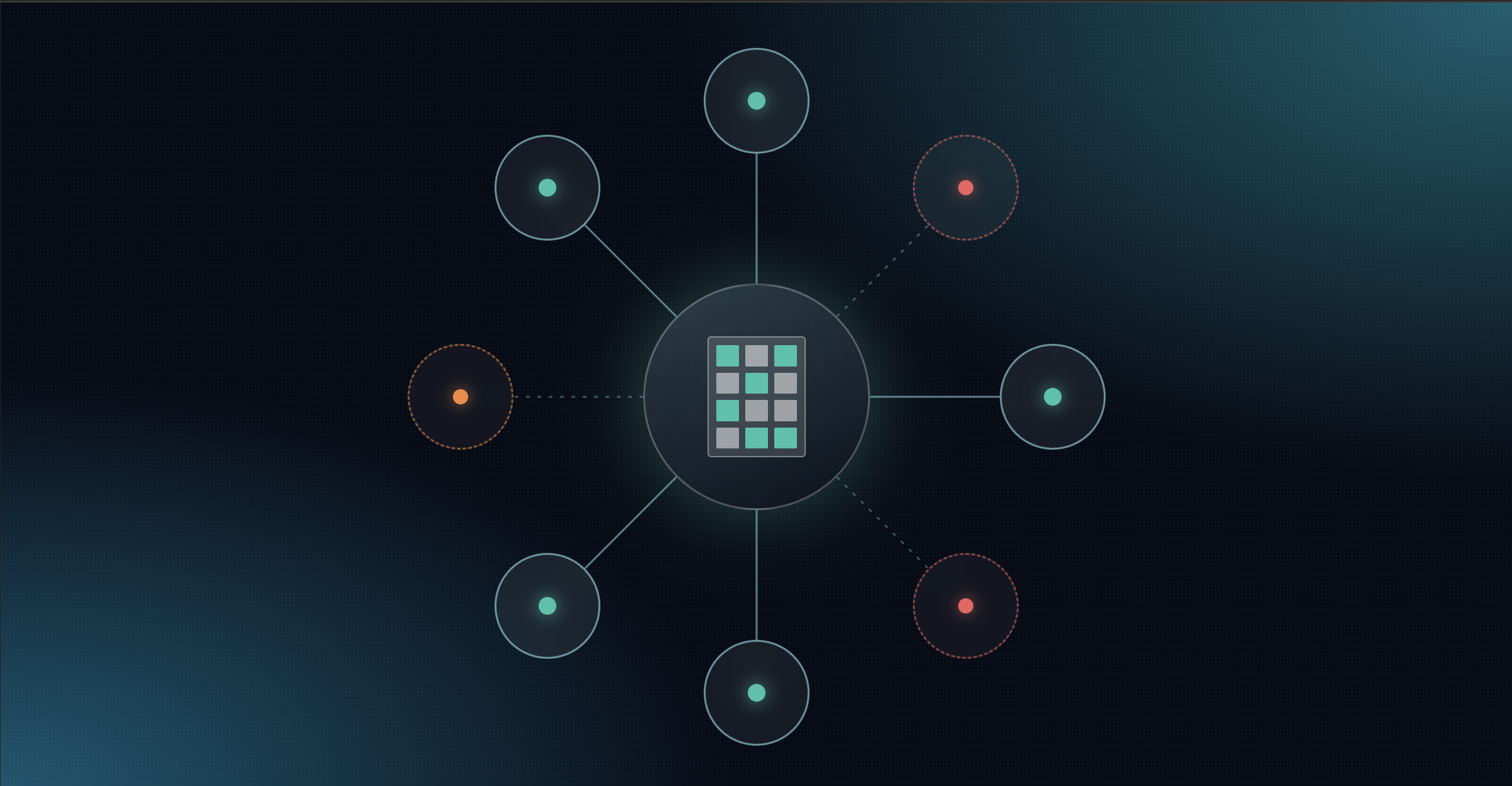
The Problem: Compliance platforms that can’t connect to your existing security stack, your SIEM, EDR, cloud security tools, IAM systems, and vulnerability scanners require your team to manually bridge the gap. The result is fragmented visibility: your compliance posture reflects what people have entered, not what your environment actually looks like.
What Success Looks Like: An integration-first architecture ingests telemetry directly from your security stack, translating real-time signals into control evidence without human translation. Your compliance posture continuously reflects your actual environment.
5. No Financial Risk Context
The Problem: Compliance programs that produce only technical metrics, heat maps, maturity scores, and lists of findings fail to connect security investment to business outcomes. Without financial context, budget conversations rely on intuition and advocacy rather than data. Security leaders lose the argument to business units that can show ROI.
What Success Looks Like: Cyber risk quantification using methodologies like FAIR or NIST 800-30 translates technical risk data into potential financial losses. When your CFO can see that a specific control gap represents $12M in expected annual loss, remediation decisions become straightforward.
6. Unclear Control Ownership
The Problem: Compliance tasks that aren’t clearly assigned to specific owners fall through the cracks. In large enterprises with distributed teams, multiple business units, and complex organizational structures, ambiguous ownership creates gaps that surface at audit time as findings rather than warnings.
What Success Looks Like: Platforms with explicit workflow automation clearly assign ownership of controls, track remediation progress, and automatically escalate overdue items. Compliance accountability is visible to everyone, including the executives who need to enforce it.
7. Misaligned Board Communication
The Problem: Cyber risk that doesn’t translate to the CFO or board doesn’t get resourced. When the CISO presents technical findings and the board hears abstract severity ratings, the conversation stalls. Security investment competes with every other capital request and loses when it can’t speak in financial terms.
What Success Looks Like: Board-ready reporting that shows risk posture, loss exposure, and the ROI of planned remediation investments changes the dynamic. Executives who understand the business impact of compliance gaps become sponsors, not obstacles.
8. Static Risk Assessments
The Problem: Periodic risk assessments are accurate for a few days, then become increasingly out of date. Enterprise environments change constantly, with new systems, configuration changes, personnel changes, new threats, and static assessments missing all of it between cycles. Organizations discover control failures at audit time, not when they occur.
What Success Looks Like: Real-time control monitoring tracks control effectiveness continuously as your environment changes. Gaps surface when they open, not when an auditor finds them. This is the shift from point-in-time compliance to continuous compliance that the category promises and the right platform delivers.
9. Integration Bottlenecks
The Problem: Platforms that don’t connect to your environment require a data lake, a custom integration project, or both. Enterprise security stacks are complex and varied; organizations shouldn’t have to replace their tools or build a separate data infrastructure for their compliance platform to work.
What Success Looks Like: Platforms built on direct API integrations with common enterprise security tools, without requiring a centralized data lake, thereby reducing deployment friction and accelerating time to value. Your existing stack becomes the data source; the compliance platform becomes the intelligence layer on top of it.
10. Insufficient Training and Change Management
The Problem: The trust gap is the most underestimated failure point. Control owners and auditors who built their expertise around manual processes, spreadsheet tracking, periodic evidence collection, bespoke audit prep, don’t abandon those workflows because a new platform was deployed. Asking teams to change overnight creates resistance that no feature set can overcome.
What Success Looks Like: Successful implementation pairs technology with deliberate change management: executive sponsorship, phased rollouts that demonstrate value early, and clear metrics that show the platform is working. Platforms that automate the most painful tasks first, evidence collection, framework crosswalking, reporting, build adoption organically by reducing effort rather than adding it.
Key Takeaway
Continuous compliance is a viable, proven approach to enterprise compliance management. The failure points above are not arguments against the category, they are the checklist you use to evaluate whether a specific platform is architected to handle them. The right platform turns each of these failure modes into a solved problem.
Part 2: The Top Continuous Compliance Platforms for Large Organizations
With those failure points in mind, here is an evaluation of the leading platforms for enterprise continuous compliance—assessed against the criteria that actually determine implementation success at scale.
1. CyberStrong: Best Overall for Enterprise Continuous Compliance
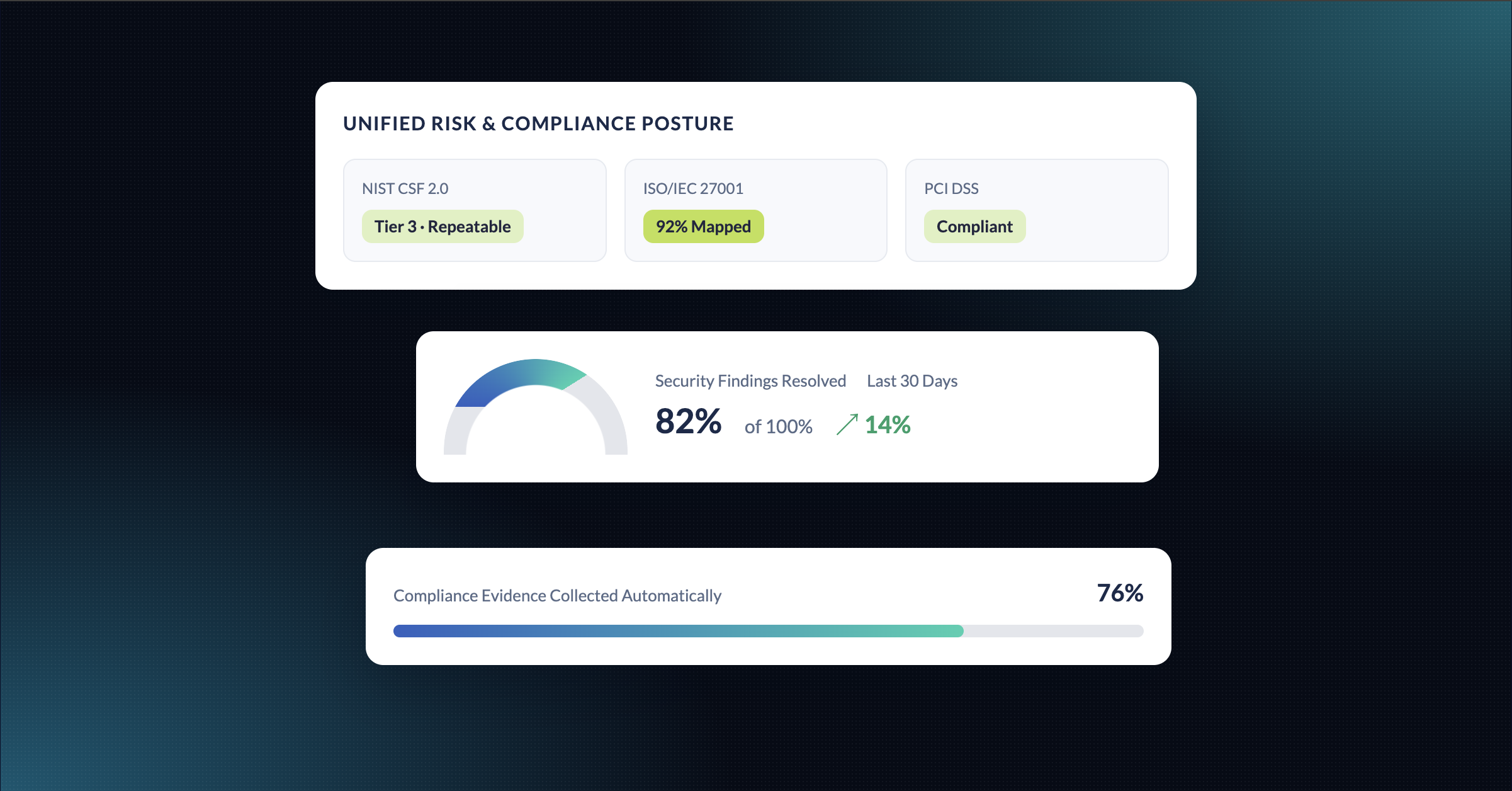
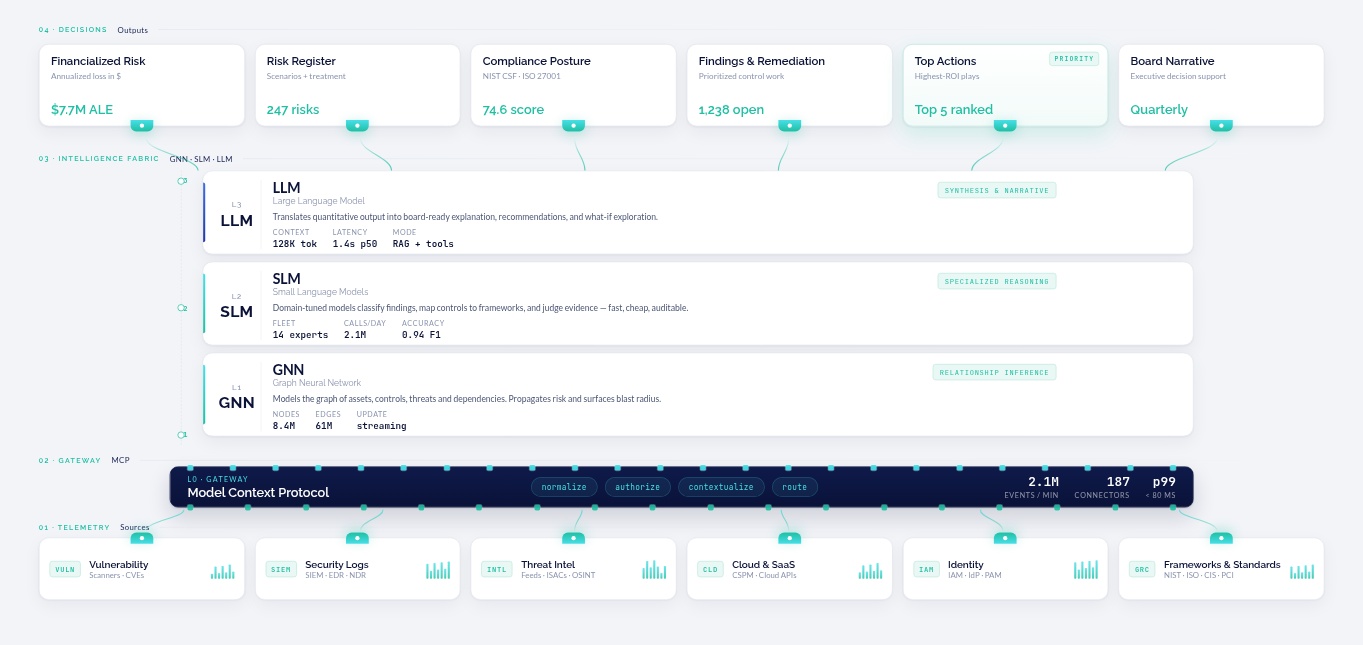
CyberSaint’s CyberStrong platform is built specifically for the failure modes that cause enterprise compliance programs to stall. While most platforms automate workflows, CyberStrong automates the underlying data, ingesting telemetry directly from your security stack to continuously update control status, compliance posture, and cyber risk metrics without human intervention.
What sets CyberSaint apart is its combination of capabilities that simultaneously address every failure point in Part 1. The platform’s AI-powered crosswalking automatically maps a single assessment across NIST, ISO, PCI, CMMC, and dozens of other cybersecurity frameworks. Its cyber risk quantification engine translates technical risk into financial terms, giving CFOs and boards the dollar-denominated loss exposure they need to make investment decisions. And its real-time control monitoring means your compliance posture reflects your actual environment, not last quarter’s snapshot.
CyberSaint is recognized by Gartner as a Sample Vendor for both Cyber GRC and Cybersecurity Continuous Controls Monitoring, and customers report reducing manual assessment effort by over 70%.
Key Capabilities
- AI-powered crosswalking across 50+ frameworks, eliminating redundant testing and duplicate evidence collection
- Cyber risk quantification using FAIR and NIST 800-30 methodologies, translating technical gaps into financial loss exposure
- Real-time control monitoring via direct telemetry ingestion from cloud, EDR, SIEM, IAM, and vulnerability systems, no data lake required. Learn more about the CyberStrong Integrations.
- Automated evidence collection that builds audit-ready documentation continuously, not just before an audit
- Executive and board dashboards showing risk posture, potential losses, and return on security investment
- Remediation prioritization using AI-native analysis of internal and external signals
Considerations
- The breadth of capabilities means initial configuration benefits from a phased implementation plan aligned to your specific use cases
- Organizations new to financial risk quantification may need guidance to fully adopt FAIR-based modeling. CyberStrong takes a model-agnostic approach, allowing organizations to choose their model of choice for calculations and providing flexibility.
- Enterprise-scale deployments are structured as phased rollouts rather than all-at-once implementations
Best Fit: Large enterprises that need a single system of record for controls, risk, and compliance, powered by continuous, automated assurance from their existing security stack.
2. AuditBoard: Audit-Workflow Focus
AuditBoard centers on audit and SOX compliance, offering an interface that audit teams adopt quickly. The platform centralizes audit planning, execution, and reporting, and includes controls testing and evidence management capabilities. It is purpose-built for the audit function and performs well within that scope.
For organizations whose primary need for continuous compliance is streamlining internal audit workflows, AuditBoard is a capable option. However, it does not provide the real-time telemetry-driven control monitoring, financial risk quantification, or multi-framework crosswalking that large enterprises operating across complex regulatory environments require.
Strengths
- User-friendly interface designed for audit professionals
- Strong SOX and ITGC workflow automation
- Consolidated audit documentation and reporting
Limitations
- Evidence collection is audit-cadence-driven rather than continuous
- No financial risk quantification capabilities
- Limited integration ecosystem for enterprise security tool stacks
Best Fit: Organizations prioritizing continuous audit functions over operational, telemetry-driven compliance monitoring.
3. ServiceNow GRC: IT Service-Centric Environments
ServiceNow GRC integrates with the broader ServiceNow ecosystem, making it a natural option for organizations already standardized on ServiceNow for IT service management. The platform handles policy management, risk assessments, and audit workflows, and its ITSM alignment connects GRC activities directly to ticketing and incident response.
Continuous compliance capability in ServiceNow depends heavily on how deeply your organization has customized the environment. Out of the box, it is a workflow platform, not a telemetry-driven compliance engine. Achieving real-time control monitoring requires significant configuration and custom integration work.
Strengths
- Native integration with ServiceNow ITSM for organizations already on that platform
- Single platform for IT operations and GRC activities
- Workflow automation connecting compliance tasks to operational processes
Limitations
- Not a purpose-built continuous compliance engine—real-time monitoring requires significant custom development
- Financial risk quantification requires add-ons or workarounds
- Organizations not already on ServiceNow face a steep adoption curve
Best Fit: ServiceNow-centric organizations seeking ITSM-aligned compliance workflows rather than standalone continuous compliance capability.
4. MetricStream: Large-Scale GRC Programs
MetricStream offers a broad GRC platform covering risk, compliance, audit, and third-party management. It serves large enterprises with complex regulatory environments and multiple business units that require coordinated governance, and it includes regulatory change management capabilities.
Implementation timelines for MetricStream tend to be longer than cloud-native alternatives, and real-time control monitoring at the depth enterprises need requires substantial customization. The platform’s breadth can create complexity for teams focused primarily on cyber risk and continuous control assurance.
Strengths
- Broad capability set spanning risk, compliance, audit, and vendor management
- Scalable enterprise architecture for complex multi-entity structures
- Regulatory intelligence and change management capabilities
Limitations
- CCM is periodic rather than continuous, without significant customization
- Implementation timelines extend longer than cloud-native platforms
- Financial risk quantification in cyber-specific scenarios requires additional development
Best Fit: Enterprises with established, process-heavy GRC programs seeking incremental continuous compliance enhancements.
5. Archer: Established Risk Programs
Archer has served enterprise risk and compliance programs for many years with configurable modules for risk management, policy administration, and vendor oversight. It handles operational risk scenarios and business continuity planning, and works well for organizations with established GRC teams and defined processes.
Organizations moving toward real-time cyber risk monitoring and AI-powered automation will find that Archer’s architecture requires significant manual configuration to meet modern continuous compliance requirements. It is a strong platform for what it was designed to do; it was not designed for telemetry-driven, always-on control assurance.
Strengths
- Configurable architecture that adapts to existing risk program structures
- Covers operational risk and business continuity in addition to cyber risk
- Established presence in enterprise environments
Limitations
- Real-time control monitoring requires additional configuration or integrations
- AI-powered automation capabilities are less mature than newer platforms
- Financial risk quantification for cyber-specific scenarios requires custom development
Best Fit: Organizations with mature, established risk programs that need configurable GRC workflows rather than continuous, telemetry-driven compliance monitoring.
Platform Evaluation: Continuous Compliance Capabilities
|
Platform |
Financial Risk Quantification |
AI-Powered Crosswalking |
Real-Time Control Monitoring |
Best Fit |
|---|---|---|---|---|
|
CyberSaint (CyberStrong) |
✓ |
✓ |
✓ |
Large enterprises seeking unified, AI-native compliance |
|
AuditBoard |
✗ |
✗ |
✗ |
Audit-first teams managing SOX and ITGC workflows |
|
ServiceNow GRC |
✗ |
✗ |
Partial |
Organizations are already standardized on ServiceNow ITSM |
|
MetricStream |
✗ |
✗ |
Partial |
Complex multi-entity GRC programs with heavy workflow needs |
|
Archer |
✗ |
✗ |
✗ |
Established risk programs with defined manual processes |
How to Choose the Right Continuous Compliance Platform for Your Enterprise
The failure points in Part 1 translate directly into evaluation criteria. When assessing platforms, ask:
- Can it automatically crosswalk a single assessment across all the frameworks we operate under?
- Does it quantify risk in financial terms that executives and boards can act on?
- Does it ingest telemetry directly from our existing security stack, or does it require a data lake or manual exports?
- Can it monitor the effectiveness of controls in real time, or does it rely on periodic assessment cycles?
- Does it provide clear control, ownership, workflow automation, and escalation capabilities?
- Is it architected to scale to enterprise data volumes, or does it slow down as environments grow?
No platform covers every dimension equally. The right choice depends on where your organization is in its compliance maturity, what your existing tool stack looks like, and how quickly you need to demonstrate value to executives and auditors.
For enterprises that need all of those capabilities in a single, integrated platform and need them to work continuously, not periodically, CyberStrong is the most comprehensive option available.
Why CyberSaint Is the Best Choice for Enterprise Continuous Compliance
CyberSaint was built to solve the specific problems that cause enterprise compliance platforms to fail. The platform’s AI-native architecture means controls are scored in real time as data changes across your environment, not just at audit time. This eliminates the point-in-time snapshot problem that leaves most organizations scrambling before each assessment.
The crosswalking capability means your team can assess once and satisfy dozens of standards simultaneously. The CRQ engine means your CFO and board can see potential dollar losses. And because CyberStrong connects to your existing security tools without requiring a centralized data lake, deployment doesn’t mean replacing your stack.
CyberSaint makes compliance a byproduct of doing security right, not a separate workstream that competes with it.
Ready to see continuous compliance that actually works at enterprise scale?
Schedule a demo with CyberSaint to see how CyberStrong addresses each failure point covered in this article and what a continuous compliance program looks like when the platform is built for the problem.
FAQs: Continuous Compliance Platforms for Large Enterprises
What is the biggest reason continuous compliance software fails at enterprises?
The most common root cause is an architectural mismatch—platforms designed for periodic, manual workflows deployed into environments requiring real-time, telemetry-driven monitoring. A close second is the trust gap: control owners and auditors who have built expertise around manual processes resist automation, because they can’t validate against their existing knowledge.
Overcoming both requires a platform architected for continuous data ingestion and a change management approach that demonstrates the reliability of automation before asking teams to abandon manual fallbacks.
Can one compliance platform support multiple frameworks simultaneously?
Yes, with the right platform. AI-powered crosswalking maps controls across dozens of frameworks simultaneously, allowing organizations to assess once and apply results to standards without duplicating work. CyberSaint’s crosswalking automates this mapping, reducing framework fatigue for organizations managing overlapping regulatory obligations.
How long does an enterprise's continuous compliance platform implementation take?
Implementation timelines vary by organizational complexity, but the most successful enterprise deployments follow a phased approach rather than an all-at-once rollout. CyberSaint customers often see initial value within the first week, with full deployment gradually building adoption. The phased model also reduces change management friction by delivering visible wins early.
Why do compliance dashboards go unused after implementation?
Dashboards fail when they display data nobody can act on. Technical metrics like control maturity scores don’t help a CFO decide where to invest. CyberSaint addresses this with a model-agnostic CRQ that empowers executives to use to make risk-informed decisions.
How do you measure ROI for a continuous compliance platform?
Start with time savings across compliance activities like evidence collection, framework mapping, audit prep, and reporting. Then measure audit findings: if your platform catches control gaps before auditors do, you’re reducing both financial risk and the cost of remediation under pressure. Finally, track executive engagement. If board members are asking questions based on dashboard data rather than static reports, your platform is creating the visibility that drives better security investment decisions.
What is the difference between continuous compliance and continuous control monitoring?
Continuous control monitoring (CCM) is the technical capability that enables continuous compliance. CCM platforms ingest telemetry from your security stack, translate it into control evidence, and update compliance posture in real time. Continuous compliance is the program outcome—always-on audit readiness, real-time risk visibility, and compliance as a byproduct of ongoing security operations rather than a separate, periodic workstream. The two terms are often used interchangeably, but CCM is the engine, and continuous compliance is the result.