

.png)
.png)
.png)
%201.png)
.png)
The cybersecurity landscape is currently witnessing a fundamental architectural shift. We are moving beyond the era of predictive AI, where algorithms identify anomalies and suggest remediation, into the era of agentic AI.
For the CISO, this transition presents a profound governance challenge. When an AI agent autonomously isolates a subnet, revokes user privileges, or reroutes traffic to mitigate a threat, it executes a business decision. If that decision causes downtime or interrupts critical revenue streams, who is liable? More importantly, was the decision financially defensible based on the risk posture at that exact millisecond?
Traditional governance, risk, and compliance (GRC) models, built on static policies and periodic assessments, are ill-equipped for this reality. As organizations integrate autonomous agents into their defense strategies, the mandate for 2026 is clear: we must establish a framework for continuous, explainable, and financially quantified AI decision governance.
How to Layer Several Models of AI: LLMs and Agentic Vision
To understand the governance gap, one must first distinguish between the current state of AI and the 2026 reality.
Most security teams today use AI for augmentation. Large Language Models (LLMs) and machine learning classifiers sift through petabytes of telemetry to flag alerts, which human analysts then investigate. The human remains the ultimate decision gate.
“LLMs are now in broad adoption across a range of business use-cases. Yet, they remain unreliable for the more complex analytical problems presented by fields like cybersecurity,” explains Padraic O’Reilly, Founder and Chief Innovation Officer at CyberSaint. “They are useful for summarization and the review of embedding disparate frameworks or telemetry, and their respective mappings to controls and policies.”
Agentic AI removes the bottleneck of human intervention. These systems are designed to pursue high-level goals, such as "maintain system availability" or "neutralize lateral movement," by autonomously formulating and executing multi-step plans. They interact directly with infrastructure, modifying configurations and access controls in real-time.
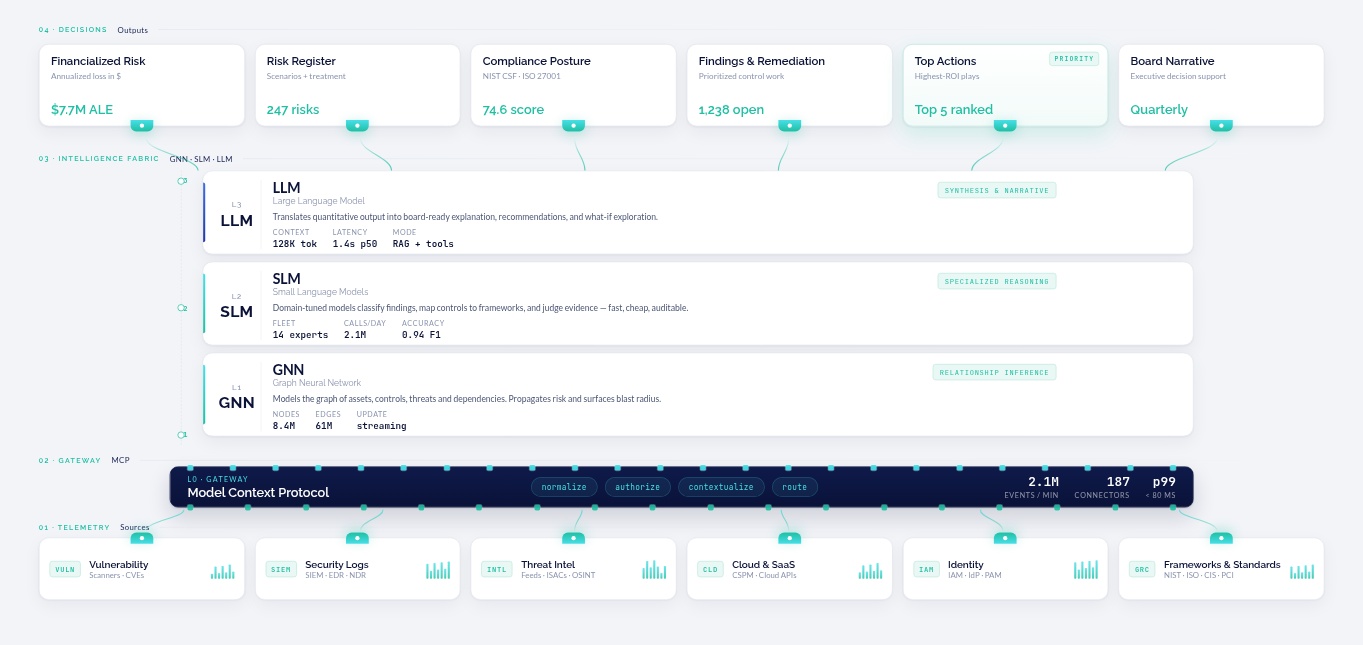
O’Reilly explains that, together, the models can deliver unprecedented automation, relieving teams of the burden of manual security operations. “Agentic technology can scrape applications for useful policy or compliance data. The LMM cannot reliably scrape applications, but a visual agent can. Then the LLM can help structure that bulk data into formats that inform risk and compliance.”
While this capability is necessary to keep pace with the speed of AI-driven attacks, it introduces significant operational risk. An agentic model operating without strict guardrails is a liability. It creates a scenario in which algorithms modify critical security controls faster than human oversight can keep up with.
Why Legacy Governance Models Fail
The standard approach to IT governance relies on the "trust but verify" model, typically executed through quarterly audits, annual assessments, and static policy documents. This model is incompatible with agentic AI for three specific reasons.
1. The Velocity Mismatch
Legacy governance operates on human timescales, weeks, months, or fiscal quarters. Agentic AI operates on machine timescales, milliseconds and microseconds. A compliance violation committed by an autonomous agent happens instantaneously. By the time a quarterly audit identifies that an AI agent misconfigured a cloud permission, the exposure window has already closed, or worse, been exploited.
2. The Explainability Gap (The "Black Box")
When a human analyst makes a controversial security decision, they can explain their reasoning to a board or auditor. Deep learning models, however, often function as "black boxes." They generate outputs based on opaque billions of parameters.
Without an explainability layer, a CISO cannot defend an AI-driven decision to stakeholders. If an AI agent shuts down a customer-facing portal to prevent suspected data exfiltration, and that suspicion proves false, the organization loses revenue. Without a clear audit trail explaining why the AI acted, that loss is indefensible.
3. Lack of Financial Context
Current AI models optimize for technical metrics, such as accuracy or recall. They rarely optimize for financial risk. An AI might decide to block a transaction to achieve 99.9% security assurance, even though the transaction represented critical business value. Traditional governance lacks the real-time financial data mapping required to inform these automated decisions.
The Pillars of Effective AI Governance
To navigate the 2026 landscape, security leaders must re-architect their governance programs. Effective AI decision governance is based on three pillars: Continuous Monitoring, Explainability, and Financial Defensibility.
Continuous Controls Monitoring for AI
Governance must move from static documents to dynamic code. Policies must be translated into machine-readable guardrails that actively monitor AI.
This requires Continuous Controls Monitoring (CCM) that integrates directly with the AI infrastructure. Instead of asking, "Do we have a policy for AI interaction?", the system asks, "Did Agent X violate Policy Y in the last 5 seconds?"
This approach ensures that every autonomous action is scored in real-time against established frameworks, such as the NIST AI Risk Management Framework (AI RMF) or ISO 42001. If an agent attempts an action that lowers the organization's compliance score below an acceptable threshold, the action is blocked or flagged immediately.
Explainability as a Compliance Requirement
For AI to be viable in a regulated enterprise, its decisions must be auditable. "The algorithm did it" is not a valid legal defense.
Organizations must implement governance layers that log the decision logic of agentic systems. This involves capturing the input data, the confidence score, the triggered policy, and the expected outcome of the action. This telemetry allows post-incident reconstruction, transforming a "black box" event into a transparent, audit-ready record.
Financial Defensibility and Risk Quantification
This is the most critical and often overlooked pillar. For an AI decision to be valid, it must be proportionate to the risk it mitigates.
Integrating automated Cyber Risk Quantification (CRQ) with AI governance allows organizations to assign financial values to autonomous actions. For example, the governance layer can calculate that the risk of a potential breach is $5 million, while the cost of automated remediation (e.g., system downtime) is $50,000. In this context, the AI's decision is financially defensible.
Without this financial context, AI operates in a vacuum, potentially causing operational disruption that outweighs the security benefit.

CyberSaint: Architecting Connected Cyber Risk Intelligence
Addressing the challenge of AI governance requires a platform that unifies these disparate elements, risk, compliance, and automation, into a single source of truth.
CyberSaint empowers organizations to transition from reactive oversight to proactive Cyber Risk Intelligence. Our platform is engineered to handle the complexities of the 2026 threat landscape through distinct capabilities:
- Automated Framework Mapping: CyberSaint continuously maps AI-driven controls and evidence to relevant standards, such as the NIST AI RMF and the EU AI Act. This ensures your compliance posture remains up to date as your AI agents scale without manual intervention.
- Real-Time Risk Quantification: By ingesting live telemetry, CyberSaint dynamically calculates the financial exposure of your digital assets. This data provides the necessary context for AI decision-making, ensuring that automated actions align with the organization's risk appetite.
- CRQ can be a time-consuming process. We’ve made it easier by embedding it through the cyber risk management lifecycle with automation and model flexibility.
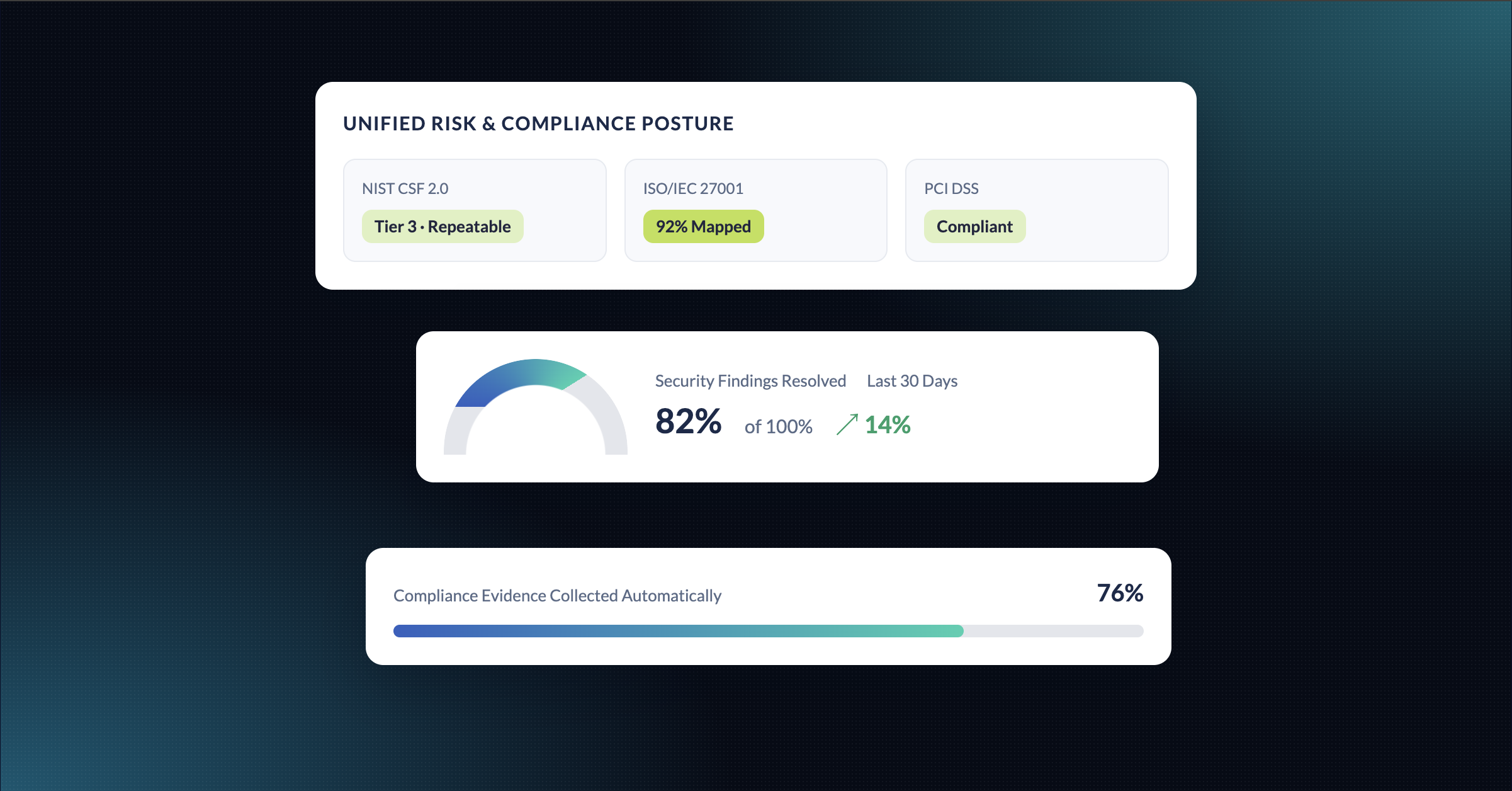
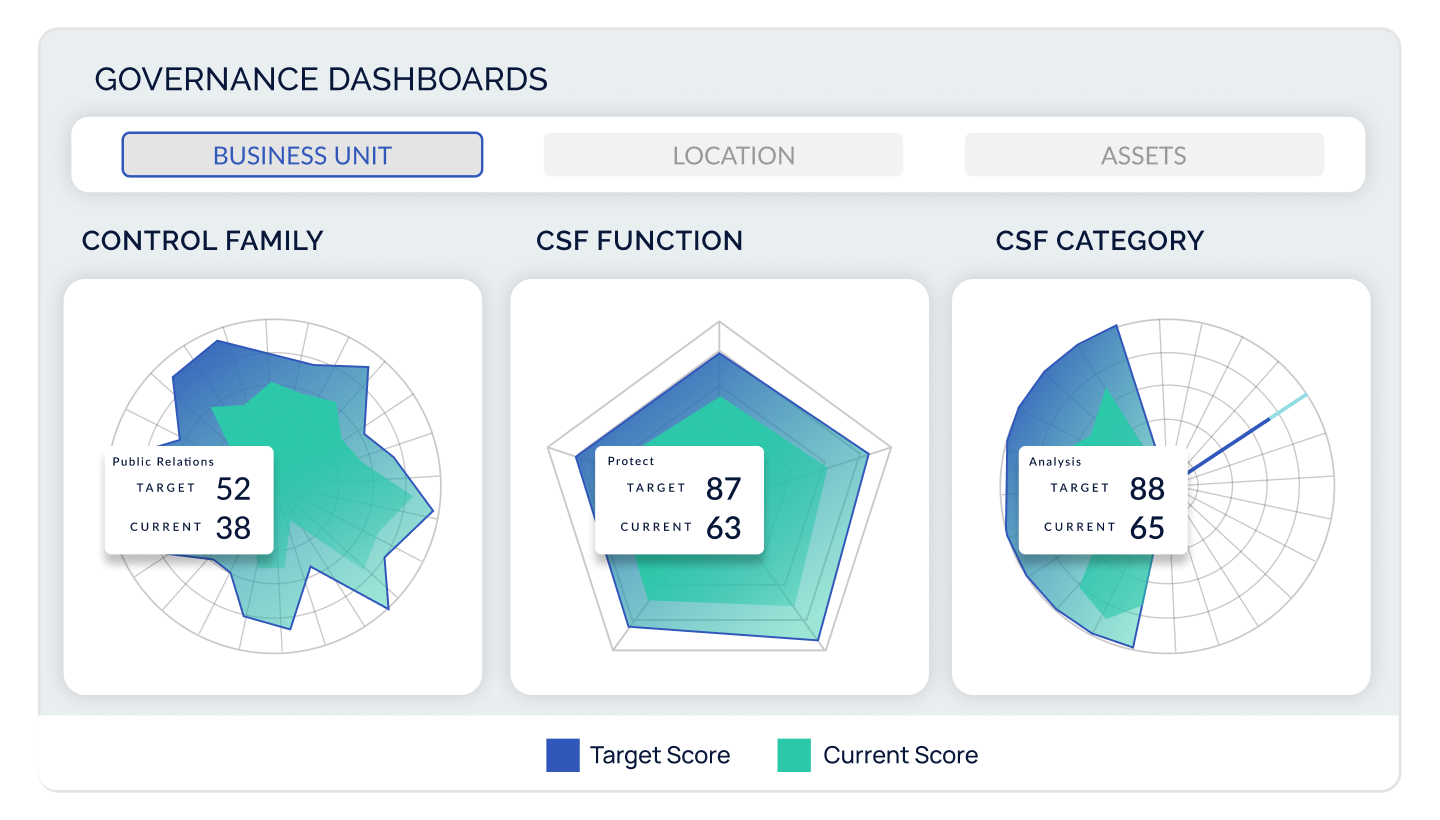
- Unified Governance Dashboard: We provide a consolidated view of your risk posture, bridging the gap between technical AI operations and executive reporting. CISOs can view in real-time how autonomous decisions impact the organization's risk profile and compliance status.
Preparing for the AI-Enabled Future
“The biggest cybersecurity shift in 2026 that everybody is getting wrong is this concept of being AI native. It's actually a misnomer. We're not going to be 100% AI native. We're going to be AI-enabled and AI-driven, but AI native is impossible. And you have many vendors talking about being AI-native next year, but it just won't happen. It's not realistic.” - Matt Alderman, CPO of CyberSaint.
AI and agentic technology can transform cybersecurity operations, but they can’t reach the native core of cyber operations. It offers the speed and scale necessary to combat an increasingly sophisticated adversary. However, the organizations that succeed in 2026 will not be those with the smartest AI, but those with the strongest governance.
Security leaders must act now to build the guardrails for this future. This means moving away from the comfort of spreadsheets and static assessments, and embracing a governance model that is as fast, dynamic, and intelligent as the systems it seeks to control.
By focusing on explainability, continuous monitoring, and financial quantification, CISOs can transform AI from a potential liability into a strategic asset.
Take the next step in securing your autonomous future.