What is Cyber Risk Intelligence?
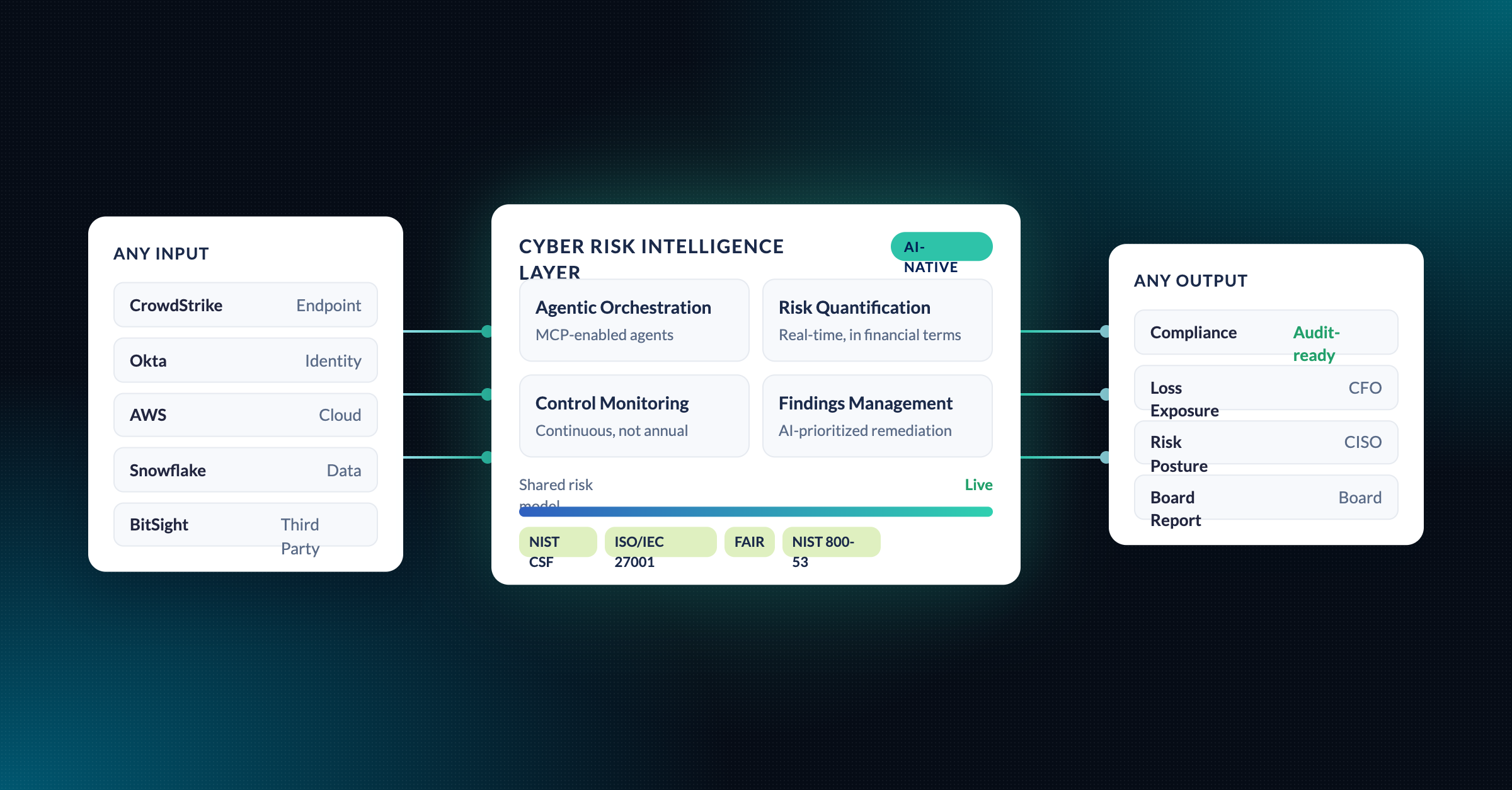
Cyber risk intelligence continuously connects security data to business impact. It brings together threat and vulnerability data, control posture, and business context; expresses exposure in financial terms; and updates as conditions change. It extends GRC rather than replacing it: GRC establishes the controls and obligations an organization must meet, and cyber risk intelligence shows which risks matter most right now and what to do next.
The word that matters is intelligence. Most enterprises already have more security data than they can use: vulnerability scanner findings, detection-tool alerts, control status from audit workflows, and third-party questionnaires. The data exists. What's missing is the layer that connects it, weighs it against what the business actually depends on, and turns it into a decision.
How is Cyber Risk Intelligence Different from GRC, CRQ, and Threat Intelligence?
Each of these disciplines answers part of the risk question. Cyber risk intelligence connects those answers.
|
Answers |
Output |
Gap it leaves |
|
|
GRC |
Are our controls in place against the frameworks we follow? |
Control status, audit evidence |
Doesn't, on its own, show business impact or live exposure |
|
What is a given risk worth in dollars? |
Financial exposure estimates |
Often a periodic exercise, disconnected from daily operations |
|
|
Threat Intelligence |
What are adversaries doing, and how? |
Indicators, actor profiles, campaigns |
Describes likelihood, not what it means for your business |
|
Cyber Risk Intelligence |
Of all our risks, which matter most to the business right now, and what do we do? |
Live, financially quantified exposure with prioritized action |
Depends on the quality and coverage of connected data |
The distinction is likelihood and impact. Threat and vulnerability data describe likelihood: what could happen. Business context describes impact: what an asset or process is worth, drawn from business impact analysis, asset valuation, and loss modeling. Control posture changes both, lowering the chance a threat succeeds and limiting the damage when one does.
Cyber risk intelligence brings the three together continuously, so a vulnerability isn't just a severity score; it sits on the system that runs payment processing, with a dollar exposure attached and an owner assigned.
What does a Cyber Risk Intelligence Platform Do?
A cyber risk intelligence platform unifies four functions that most enterprises run separately.
- Compliance. Controls are mapped across frameworks and monitored continuously, so compliance evidence becomes a byproduct of security work rather than something assembled before an audit.
- Risk Quantification. Exposure is expressed in financial terms, recalculated as findings close and conditions change.
- Control effectiveness. Control posture is tracked continuously and weighed against the assets and processes it protects.
- Third-party risk. Vendor exposure feeds the same model as internal risk, instead of living in a separate spreadsheet.
You need all four, and you need all four working from the same data.
Take third-party risk: when it lives in a separate tool, a vendor's slipping posture never reaches the exposure figure the board sees, and the controls that depend on that vendor still look healthy in the compliance view. When compliance, quantification, and third-party risk share one model, a single change, such as a control drifting or a vendor's posture slipping, updates every view at once. The CISO, the GRC lead, and the board see the same risk, each in the language they act on.
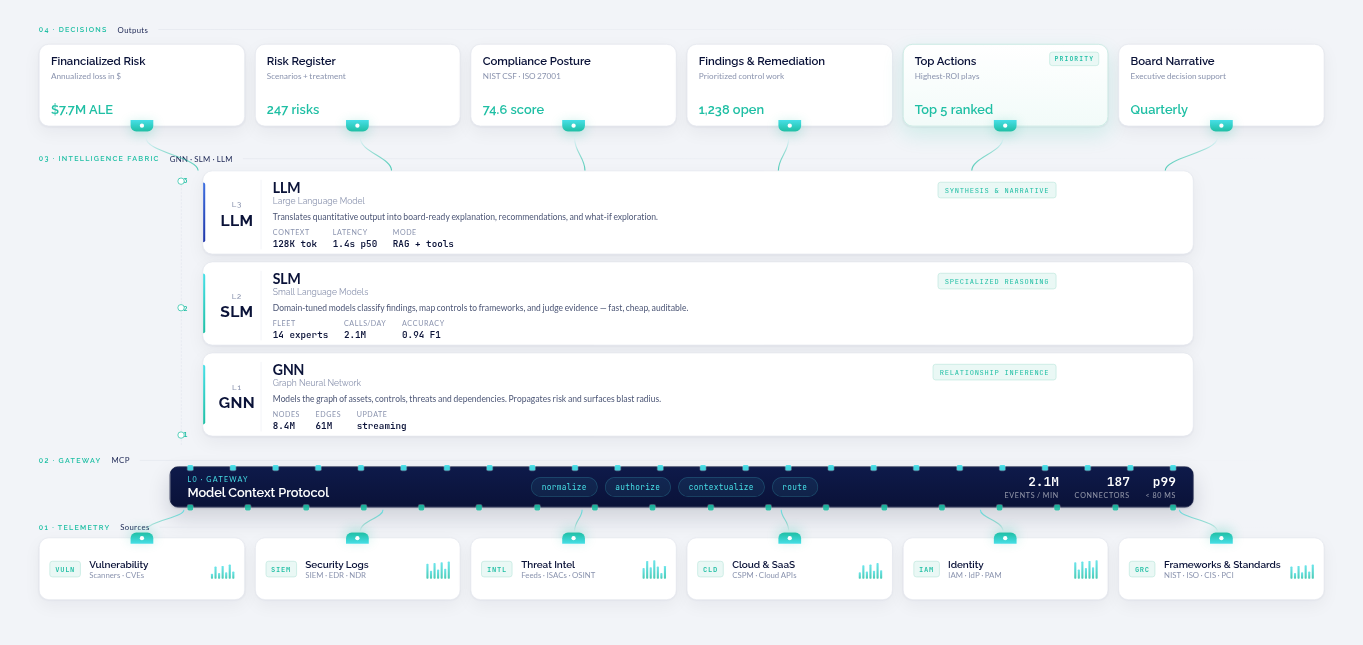
This is how the CyberStrong platform is built: an intelligence fabric that connects across the security stack you already run, without moving the data, and turns it into financially quantified, prioritized risk.
Why Enterprises are Moving to Cyber Risk Intelligence Now
Two pressures are converging.
The first is the boardroom language. CISOs are expected to report cyber risk the way the CFO reports every other risk: in dollars, against a plan, with a clear account of what investment changes. A heat map and a count of open findings can't answer "how much exposure do we have, and what does this budget request buy down?" Security leaders need to speak in business terms, and they need numbers that hold up to scrutiny.
The second is speed. AI has compressed the time between a weakness appearing and someone exploiting it. Mandiant's M-Trends 2026 report estimates the mean time to exploit at negative seven days: on average, vulnerabilities are now exploited before a patch is available, or the flaw is publicly disclosed. That leaves defenders less time than ever to see a problem, understand what it means, and close it. Static, audit-driven risk models were built for a slower cycle. A quarterly assessment describes an environment that has already changed several times over.
Keeping pace takes two things those models lack.
The first is real-time insight: posture that updates as conditions change, not on the audit calendar. The second is context: knowing which of the thousands of findings in front of you sit on the systems that matter most. Speed without context produces faster noise. Context without speed produces accurate history. Cyber risk intelligence delivers both, so teams shrink the exposure window on the risks that carry real business impact.
Independent Validation for this Approach
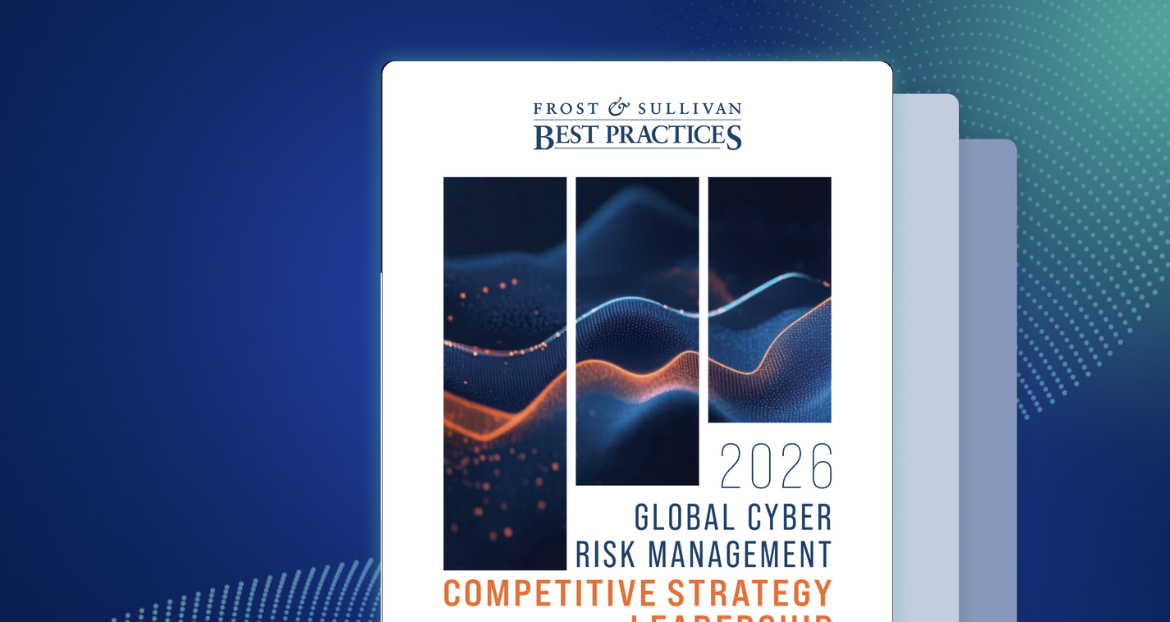
Frost & Sullivan's Competitive Strategy Leadership Recognition is an independent assessment of a company's strategy in its market, not a comparison of features.
In recognizing CyberSaint with its 2026 Global Cyber Risk Management Competitive Strategy Leadership Recognition, Frost & Sullivan described CyberStrong as "an integrated cyber risk and compliance intelligence layer embedded within enterprise operations."
That's the approach CyberSaint has been building toward: not a replacement for compliance programs or a standalone quantification exercise, but an intelligence layer that connects security data to business decisions.
Frequently Asked Questions
Is cyber risk intelligence the same as threat intelligence? No. Threat intelligence describes what adversaries are doing, which feeds into likelihood. Cyber risk intelligence combines likelihood with business impact to show which risks matter most to your organization and what they're worth in dollars.
Does cyber risk intelligence replace my GRC platform? No. It extends it. GRC establishes the controls and obligations your organization must meet; cyber risk intelligence connects control posture to live threat and vulnerability data and to business impact. Your compliance obligations stay the same, and the evidence becomes a byproduct of security work rather than a separate effort.
Who uses cyber risk intelligence: the CISO, the CFO, or the board? All three, from the same data. Security teams use it to prioritize remediation, CISOs use it to plan and report, and CFOs and boards use the financially quantified view to weigh cyber risk against other business risks.
What makes a cyber risk intelligence platform AI-native? AI is part of how the platform works, not a feature layered on top: it reads relationships across security data, maps controls, and prioritizes risk. Read more in AI-native vs. bolt-on AI.