

.png)
.png)
.png)
%201.png)
.png)
For years, the core metrics of cyber resilience strategy revolved around prevention and recovery: mean time to detect (MTTD) and mean time to respond (MTTR). While essential, these measurements only capture fragments of a much larger strategic imperative. But the world has changed, driven by AI-accelerated threats and expanding attack surfaces, and a new metric is emerging as the primary indicator of a robust security posture: Decision velocity.
So, what is decision velocity? It's the speed at which an organization can make accurate, financially sound, and context-aware security decisions. This goes beyond just quick incident response to include the entire governance lifecycle, from risk assessment to compliance. By 2026, organizations that make informed decisions faster than their adversaries can attack will not only survive but also innovate and grow faster than their competitors.
This transition requires a fundamental shift in the way security leaders operate. It requires moving away from static, manual workflows toward a dynamic, AI-driven model that enhances, rather than replaces, human expertise. At its best, Artificial Intelligence enables consistent, high-quality, well-governed decisions while minimizing errors caused by human fatigue. The CISO’s role must evolve into a strategic leader, capable of processing vast amounts of intelligence and acting with precision. This transformation not only strengthens cyber resilience but also sharpens competitive advantages. Additionally, faster insights improve decision-making timing and give teams the opportunity to further develop their skills.
The Operational Drag of Low Decision Velocity: What to Avoid in Your Cyber Resilience Strategy
The inability to make swift, confident decisions creates significant operational drag and amplifies risk. Decision speed is everything in business. This latency is not a single point of failure, but a systemic issue rooted in several common challenges that CISOs face daily.
1. Data Silos and Contextual Gaps
Fragmented cybersecurity data is a primary obstacle to rapid decision-making. While cyber events unfold, threat intelligence lives in one system, vulnerability scans in another, compliance evidence in spreadsheets, and risk registers in a separate GRC tool. In contrast, companies that consolidate platforms and unify information, governance, analytics, and AI into closed decision loops are often more resilient.
When a critical event occurs, security executives must manually correlate these disparate data points to form a coherent picture. This process is not only time-consuming, but also error-prone, delaying vital actions. For example, determining the business impact of a vulnerability requires mapping it to affected assets, understanding its implications for business continuity, and assessing the protective measures in place. This task is nearly impossible to perform at speed without a unified data model.
A single, cohesive view of a company's cyber resilience strategy is key to adapting to new threats and gaining a competitive edge. The ability to stay ahead of unpredictability is not just an advantage in cybersecurity; it's table stakes.
2. The Manual Burden of Cybersecurity Compliance
Traditional compliance and audit cycles operate on a quarterly or annual cadence. This point-in-time approach creates long periods where the organization's true cybersecurity compliance posture is unknown. Preparing for an audit often involves a frantic, resource-intensive effort to manually collect evidence, interview control owners, and populate framework documents. This reactive stance consumes valuable capabilities that could be dedicated to proactive cyber risk management. It also means that decisions about compliance investments are based on outdated information, rather than the real-time state of the control environment.
3. The "Black Box" of Risk Assessment
Many cyber risk assessments rely on qualitative judgments (High, Medium, Low) or infrequent quantitative analyses rather than data-driven decisions. These methods lack the granularity and timeliness required for modern cyber risk management.
When a board member asks, "What is our financial exposure to a ransomware attack on our manufacturing division right now?" a qualitative answer is insufficient.
Without the ability to dynamically quantify risk in financial terms, CISOs cannot effectively justify budget requests, prioritize remediation efforts, or communicate the value of the security program to the business. This lack of financial clarity slows down resource allocation and strategic planning. Automated cyber risk quantification can help with this, driving risk-backed data that gives security and business executives the ability to talk the same language.
How to Accelerate Decision-Making with AI-Enabled Cybersecurity Governance
Achieving decision velocity does not mean ceding control to fully autonomous AI systems.
It's more about creating opportunities and tools to support informed decision-making. The notion of a completely "AI-native" enterprise, where algorithms make all critical decisions without human intervention, is unrealistic and introduces unacceptable liability.
“If you think about what AI native means, it means 100% embedded in AI. We're not going to replace the humans with 100% AI. So the term AI native is just a misnomer. It's unrealistic. However, being AI-enabled or AI driven using AI technologies to actually drive your compliance program, we're already doing it today,” explained Matt Alderman, CPO of CyberSaint.
Artificial Intelligence processes massive datasets instantly, enabling decisions in milliseconds that previously took days or weeks. The optimal strategy is an AI-enabled approach, in which technology automates data aggregation and analysis, empowering humans to make faster, more informed decisions.

Continuous Controls Monitoring (CCM)
The foundation of decision velocity is a real-time understanding of your control environment. Continuous Controls Monitoring (CCM) automates the collection and validation of evidence from your security stack. Instead of manually testing quarterly, CCM integrates with your existing solutions (e.g., endpoint detection and cloud configuration management) to align your security posture with frameworks such as NIST 800-53 and ISO 27001 in real time. If a misconfiguration occurs or a control fails, the system provides an immediate alert. This moves compliance from a periodic event to a continuous state, giving leaders an always-on view of their security posture.
Learn more about CyberStrong Integrations and how it seamlessly aligns with your tech stack to automate controls.
Dynamic Cyber Risk Quantification (CRQ)
To make financially defensible decisions, CISOs must speak the language of the business: money. Dynamic CRQ models integrate real-time control effectiveness data, threat intelligence, and asset value information to calculate financial exposure.
For example, if CCM detects a degradation in patching compliance for critical servers, the CRQ engine can instantly recalculate the Annualized Loss Expectancy (ALE) for related risks.
This allows the CISO to present a clear business case:"Our risk of a data breach has increased by $5 million in the last 24 hours due to these specific control failures. An investment of $200,000 to automate patching will mitigate this exposure."
Unified Data and Connected Cyber Intelligence
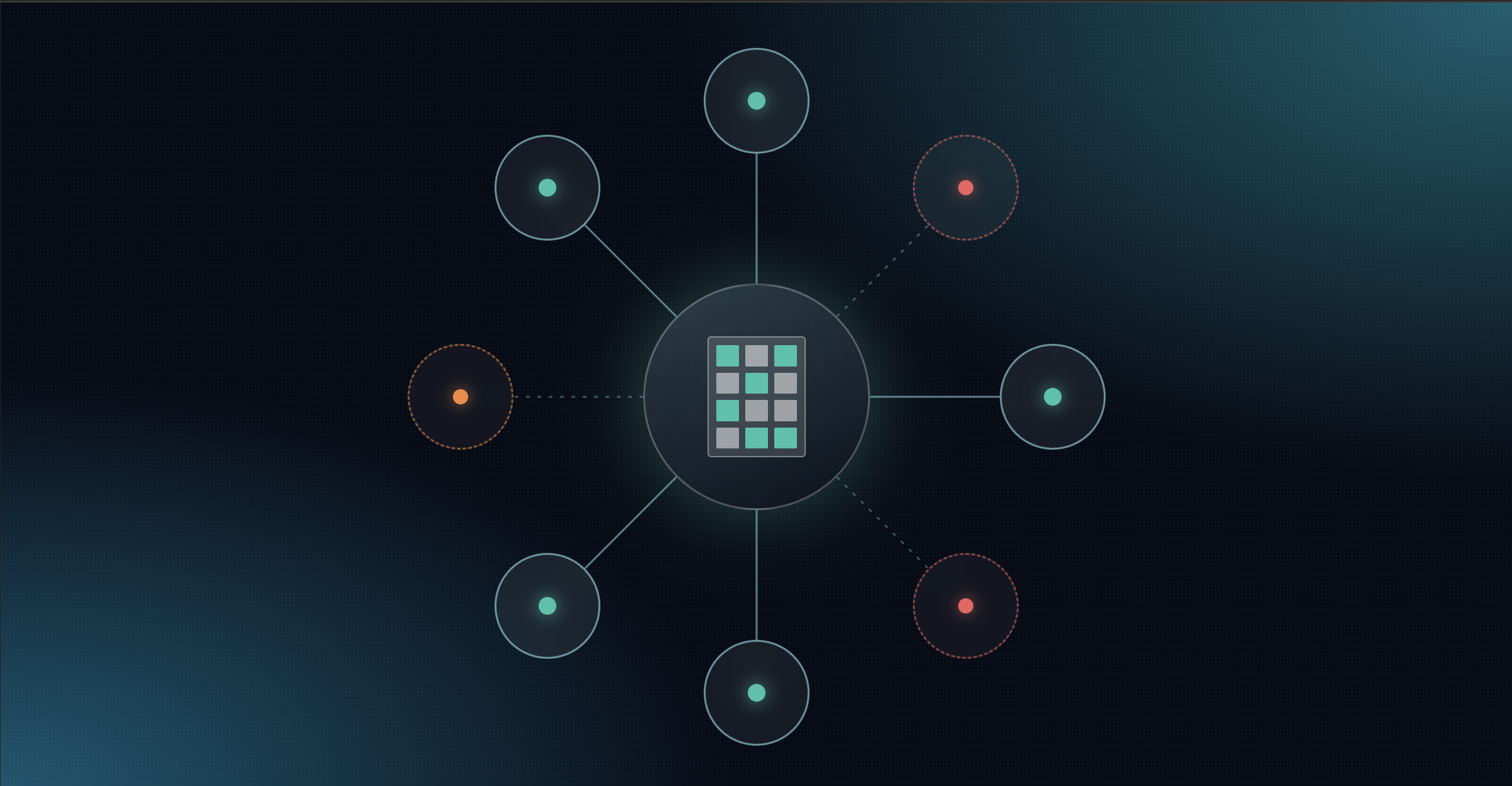
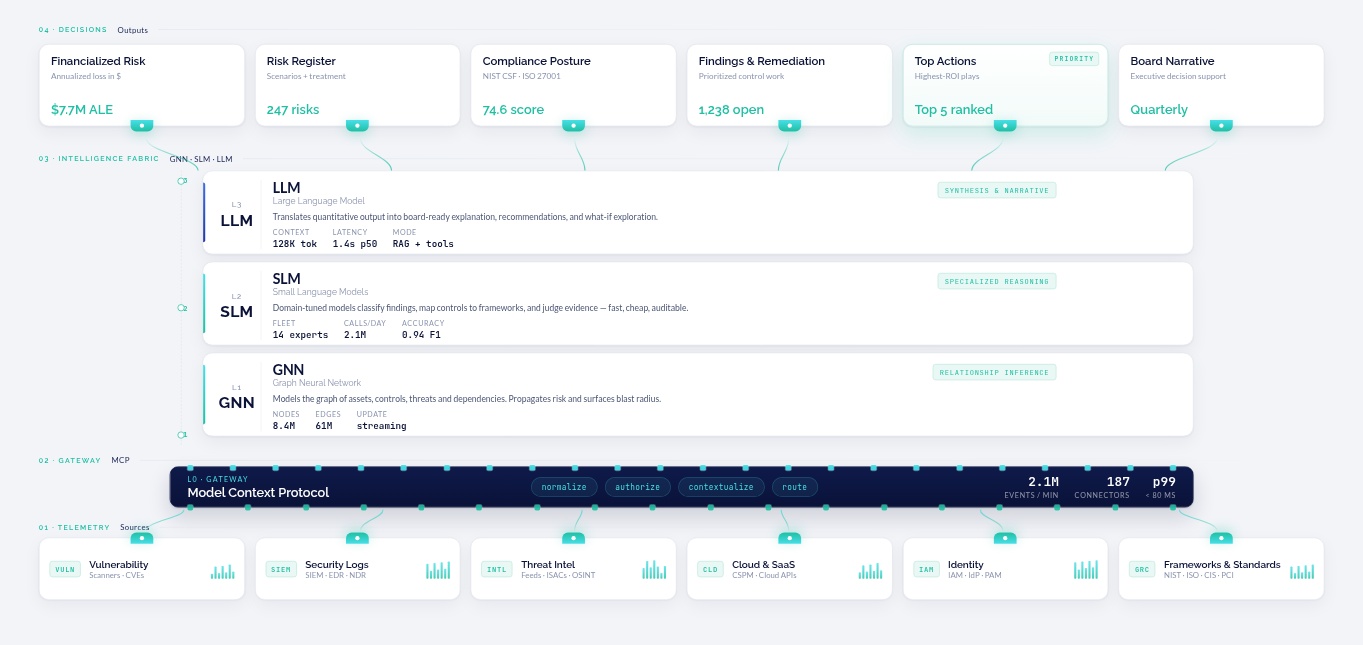
An AI-enabled cybersecurity governance platform breaks down data silos by creating a unified data model. It automatically maps relationships between assets, threats, vulnerabilities, frameworks, and business processes. With continuous security monitoring, when a new threat emerges, the Cyber GRC platform can immediately identify which assets are vulnerable, which operations are in place, the compliance implications, and the financial risk. This decision support system eliminates manual correlation, giving the CISO a complete, contextual view to drive immediate action.
CyberSaint: Engineering Decision Velocity for CISOs' Competitive Edge
The challenges of achieving decision velocity cannot be solved with more spreadsheets or personnel. It requires a purpose-built platform that unifies data and provides actionable insights that spur momentum, bolstering the organization's ability to align and adapt teams, success metrics, budgets, services, and other resources towards a common mission. The CyberStrong solution empowers organizations to build an AI-enabled cybersecurity program that accelerates, rather than replaces, human oversight.
CyberStrong delivers the core capabilities needed to accelerate security decisions vs competitors:
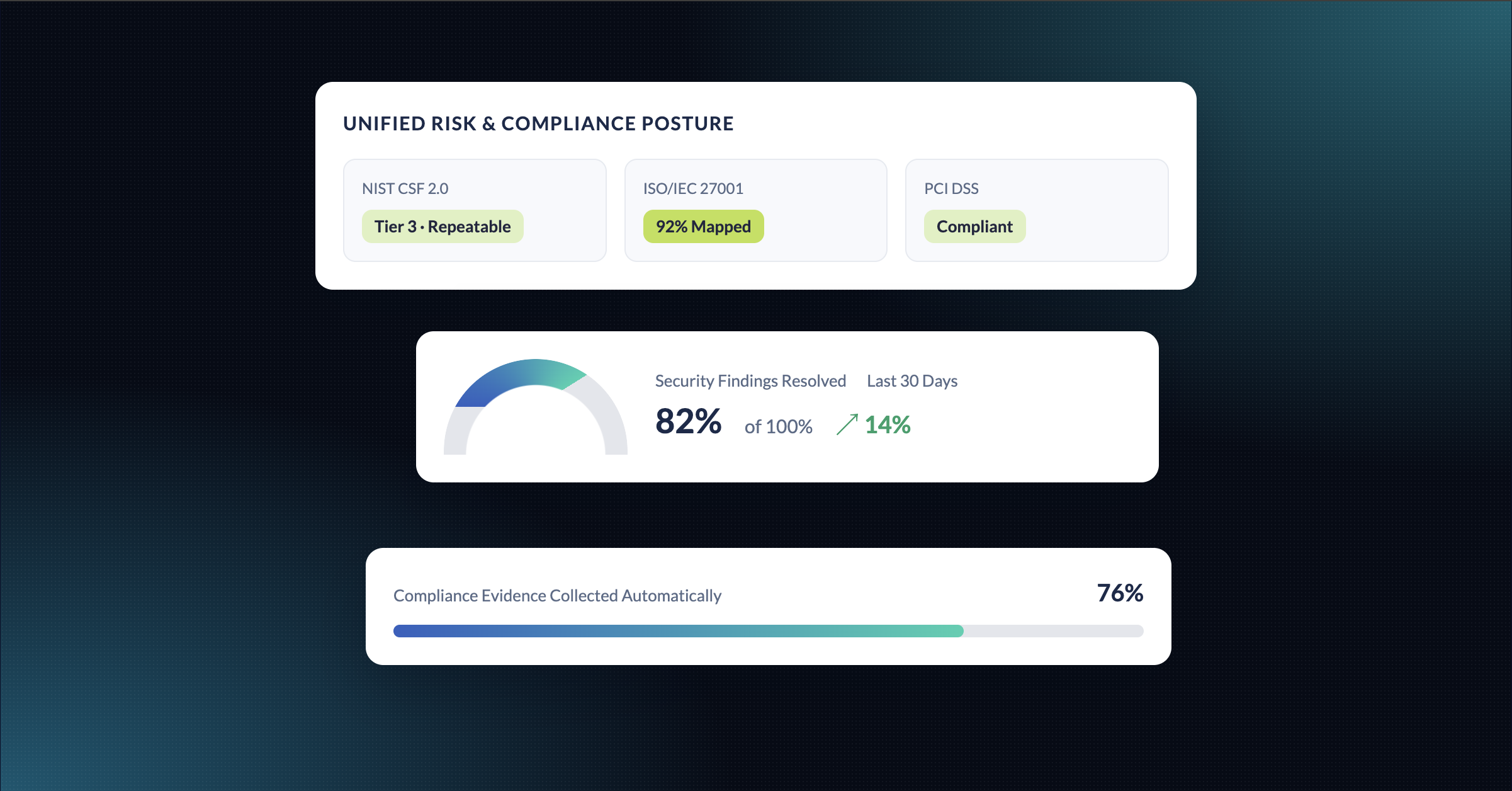
- Continuous Compliance Automation: Automate evidence collection and control scoring for a real-time, auditable view of your compliance posture across any framework. This capability transforms risk and compliance from a static, point-in-time exercise into a dynamic, continuous process.
- By integrating directly with your security stack, the platform provides real-time data on control performance, eliminating manual, periodic assessments. This shift enables proactive governance, in which deviations are identified and addressed in real time, rather than discovered during an audit cycle.
- Dynamic CRQ: CyberStrong’s model-agnostic CRQ engine uses real-time control data to translate technical risks into clear financial terms. This helps CISOs effectively communicate risk to the board and justify security investments with measurable ROI.
- Connected Decision Intelligence: CyberStrong unifies risk, compliance, threat, and business data into a live, single source of truth.
- AI-enabled risk analysis uncovers key relationships between data points, enabling clear insights into the impact of events and guiding effective decision-making. This innovation provides CISOs with the ultimate decision-making support system.
How CISOs Can Shift from Tactical Responder to Cyber Resilient Leader in 2026
In 2026, the most resilient organizations with the best competitive advantages will be those that can process information and execute decisions with superior velocity.
Relying on quarterly reports or manually assembling data from siloed systems is no longer a viable strategy. Modern CISOs must operate with the speed and precision of a military commander, armed with real-time intelligence—not just noise—and the authority to act decisively. This necessity also presents an opportunity for a cultural shift. High-trust cultures, where decisions are made closest to the point of impact, are inherently faster and more agile than their low-trust, hierarchical counterparts.
Success comes from fast learning loops that compound over time.
By adopting an AI-enabled governance model, security leaders can move beyond the limits of manual processes. The goal isn't to replace humans, but to elevate their role from data analysts to strategic decision-makers. AI helps shorten learning loops and automate more decisions, empowering employees to make timely choices and feel more engaged in their work. This ability to make fast decisions compounds, allowing teams to test ideas and learn quickly. Teams that learn faster, grow faster, and embrace this speed is the engine behind that growth.
With the right approach to AI and automation, CISOs can enhance rapid decision-making to stay ahead of adversaries, set a benchmark for cyber resilience within their industry, develop a cost-effective security strategy, and lead with confidence, all while growing as stronger, more effective leaders.
Are you prepared to meet the new standard for cyber resilience?